
Last Updated: November 4, 2026
Quick Summary
A TMJ chiropractor restores normal motion in the jaw joint and the muscles that control it through gentle, hands-on adjustment rather than just quieting pain for a day. At Kaminski Chiropractic, care starts with a five-component Gonstead analysis, including full-spine X-rays and thermal scanning, then combines soft tissue work, manual adjustment, and trigger point therapy.
- Jaw symptoms often cluster together, including clicking, locking, headaches, ear pain, and neck stiffness.
- A typical session includes soft tissue work, manual adjustment, trigger point therapy, range of motion checks, and therapeutic exercise.
- Mild soreness after an adjustment usually settles within a day or two.
- Self-myofascial release holds gentle pressure on tight jaw muscles for 20 to 30 seconds.
- Pain sharp and localized to one tooth often points to a dental cause and needs a dentist.
Table of Contents
- What TMJ Dysfunction Is and Why Your Jaw Hurts
- How a TMJ Chiropractor Adjustment Works
- The Cervical Spine and Jaw Connection
- TMJ Chiropractor Before and After: What Changes
- Why TMJ Can Feel Worse After Chiropractor Visits
- Finding a TMJ Chiropractor Near Me in Grand Rapids
- Home Care That Supports Your Jaw Between Visits
- Requesting a Jaw and Neck Evaluation at Kaminski Chiropractic
- Frequently Asked Questions
What TMJ Dysfunction Is and Why Your Jaw Hurts
TMJ dysfunction is a problem with the temporomandibular joint, the hinge that connects your lower jaw to your skull. When that joint or the muscles around it stop working smoothly, you feel it in your jaw, your ears, and often your neck.
At Kaminski Chiropractic in Grand Rapids, MI, we see this pattern often. People come in after months of clicking, clenching, and headaches. They have tried ice, soft foods, and pain relievers. Nothing holds.
The temporomandibular joint (TMJ) is one of the most used joints in your body. You use it to talk, chew, swallow, and yawn. When it is irritated, everything around it suffers.
Symptoms That Point to the Temporomandibular Joint
Symptoms of TMJ dysfunction (also called TMJD) usually show up in clusters. You may notice:
- Clicking, popping, or grinding sounds when you open or close your mouth
- Jaw pain that gets worse with chewing or talking
- Jaw locking, either stuck open or stuck shut
- Headaches, often near the temples or behind the eyes
- Ear pain or a feeling of fullness in the ear
- Neck stiffness and shoulder tension
- Tooth grinding or clenching, especially at night
Many people assume these symptoms are separate problems. They treat the headache with one pill and the jaw with another. But they often share one cause: a jaw joint that is not tracking correctly.
Causes of Jaw Pain, Clicking and Locking
Jaw pain rarely has a single cause. More often, several factors stack up over time.
Bruxism is the medical term for grinding or clenching your teeth (Bruxism). It puts constant pressure on the jaw joint and the muscles that move it. Malocclusion, meaning a misaligned bite, can force the joint into an awkward position every time you chew.
Other common drivers include:
- Stress-induced clenching, often during sleep
- Whiplash or a direct blow to the jaw
- Poor posture that pulls the head forward
- Arthritis in the jaw joint
- Long dental procedures that strain the joint
Watch out: ignoring a locked jaw for weeks can make it harder to treat later. If your jaw locks and does not release, get it checked promptly.
How a TMJ Chiropractor Adjustment Works
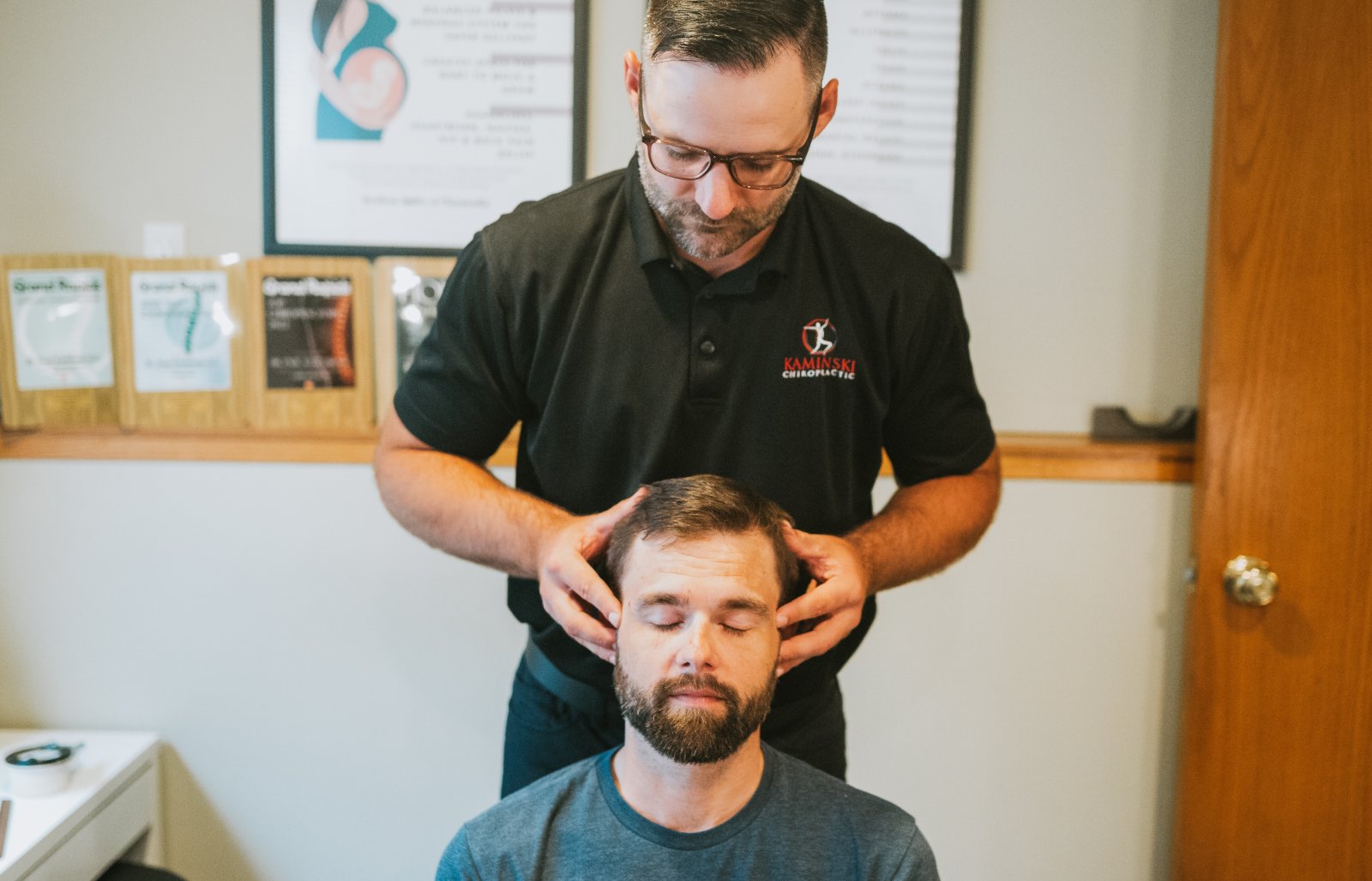
A TMJ chiropractor adjustment is a precise, hands-on correction of the joints and muscles that control your jaw. The goal is to restore normal motion, not just quiet the pain for a day.
Gonstead Technique for Back Pain: A Complete Guide
The first visit is mostly assessment. At Kaminski Chiropractic, we use a five-component Gonstead analysis. That includes a full-spine X-ray and thermal scanning to see where the nervous system is under stress.
Then comes the adjustment itself. A typical session may include:
- Soft tissue work to release tight jaw and neck muscles
- Manual adjustment of the jaw or cervical spine
- Trigger point therapy on tender knots in the masseter and pterygoid muscles
- Range of motion checks to confirm the joint moves freely
- Therapeutic exercise to help you hold the correction
The adjustment itself is usually gentle. Some patients feel relief the same day, while others need a few visits before the change holds. The exact visit schedule depends on what the exam finds.
What the adjustment is actually doing matters. When the jaw joint is not tracking correctly, the muscles that close the mouth (the masseter, temporalis, and pterygoids) compensate and tighten.
Watch out: chiropractic is not the right first stop for every jaw problem.
Curious what a first visit involves? See what to expect at your first visit.
Here is what a typical adjustment session at Kaminski Chiropractic may include, step by step.
|
Step |
What happens |
|---|---|
|
Soft tissue work |
Release tight jaw and neck muscles |
|
Manual adjustment |
Correct the jaw or cervical spine |
|
Trigger point therapy |
Target tender knots in masseter and pterygoid muscles |
|
Range of motion checks |
Confirm the joint moves freely |
|
Therapeutic exercise |
Help you hold the correction |
The Cervical Spine and Jaw Connection
The cervical spine and the jaw are linked through shared nerves and muscles. This is why a neck problem can show up as jaw pain, and the reverse.
Your jaw is controlled by the trigeminal nerve, which connects to the same nerve network as the upper neck. When the top vertebrae are misaligned, that nerve pathway can become irritated. The result is often jaw pain, clicking, or a feeling that your bite is off.
This is where cervicogenic jaw pain comes from. The jaw itself may be fine. The problem sits higher up.
Postural correction matters here too. A forward head position, common in desk work, adds strain to both the neck and the jaw muscles. Correcting that posture often reduces jaw symptoms without ever touching the jaw directly.
If neck pain is part of your picture, neck pain treatment in Grand Rapids may be the missing piece.
TMJ Chiropractor Before and After: What Changes
Before treatment, most people describe the same set of limits. They avoid hard foods. They stop yawning wide. They wake with a sore jaw and a headache.
After a course of care, the changes tend to follow a pattern:
- Less clicking and popping during normal movement
- Wider, smoother range of motion when opening the mouth
- Fewer headaches, especially the morning kind
- Reduced muscle tension in the jaw, neck, and shoulders
- Better sleep for people who clench at night
These changes usually build over several visits, not overnight. The first adjustment may bring relief, but the muscles need time to adapt.
Curious what a first visit involves? See what to expect at your first visit.
Why TMJ Can Feel Worse After Chiropractor Visits
It is common to feel sore after a TMJ chiropractor adjustment, and it usually settles within a day or two. Mild soreness is a normal response as muscles and joints adapt to a new position.
You may notice:
- A dull ache in the jaw or neck
- Slight stiffness when opening your mouth
- A temporary change in how your bite feels
These are typically short-lived. If pain gets worse and stays worse, tell your chiropractor. That feedback shapes the next visit.
Finding a TMJ Chiropractor Near Me in Grand Rapids
Searching for a TMJ chiropractor near me brings up plenty of options in Grand Rapids. The question is which one actually examines the whole picture.
Look for a provider who:
- Takes a full history, not just a jaw exam
- Uses imaging when it is warranted
- Explains what they found and why
- Adjusts the neck and jaw together, not in isolation
- Gives you home care you can actually do
Dr. Paul Kaminski is a Gonstead-focused chiropractor with over a decade of experience. He has been recognized as a Grand Rapids Magazine Top Chiropractor. What matters is whether the exam finds the root cause.
For general background on jaw disorders, the National Institute of Dental and Craniofacial Research publishes plain-language guidance on TMJ disorders. The American Chiropractic Association also explains what chiropractic care involves.
Home Care That Supports Your Jaw Between Visits
Home care supports the work done in the office, but it does not replace an exam. These habits can support general jaw comfort between visits.
Self-myofascial release is one of the most useful tools. It means applying gentle pressure to tight muscles to help them relax. Try this:
- Place two fingertips on the muscle just below your cheekbone.
- Press gently until you feel mild tension, not pain.
- Hold for 20 to 30 seconds while breathing slowly.
- Repeat on the other side.
A second safe technique targets the masseter higher on the jaw.
Watch out: stop any self-release technique that causes sharp pain, dizziness, or a change in your bite that does not settle within a few minutes, and mention it at your next visit.
Other daily habits that help:
- Keep your teeth slightly apart and your tongue relaxed
- Avoid gum, hard candy, and ice chewing
- Apply moist heat for 10 to 15 minutes in the evening
- Sleep on your back with a supportive pillow
- Take short breaks from screens to reset your posture
Stress, cortisol, and clenching. Most jaw-clenching happens below conscious awareness, often during sleep and during stressful workdays. Slow breathing for a few minutes before bed, a relaxed jaw posture during the day, and regular movement breaks are practical ways to lower the clenching load.
TMJ vs. dental problems: which professional do you need? Jaw pain is not always a joint problem. A few clues help sort it out.
A maintenance plan after treatment. The first phase of care is about reducing pain and restoring motion. The second phase is about keeping it.
For hands-on help with tight jaw and neck muscles, soft tissue work in Grand Rapids targets those knots directly. If specific tender points keep returning, manual trigger point therapy may help release them.
Requesting a Jaw and Neck Evaluation at Kaminski Chiropractic
A jaw problem that keeps coming back usually needs a proper exam, not another round of guesswork. That is what we offer at Kaminski Chiropractic.
Our process starts with a full history and a five-component Gonstead analysis. That includes full-spine X-rays and thermal scanning.
You do not need a referral to book a chiropractic appointment in Grand Rapids. If you have been told to just live with the clicking, or you have tried everything else, an evaluation can tell you whether the jaw or the neck is driving your symptoms.
Frequently Asked Questions
Can TMJ be fixed by a chiropractor?
A chiropractor can address the joint and muscle components of TMJ dysfunction, but no single provider fixes every case. Care typically combines precise manual adjustment of the jaw and cervical spine with soft tissue work, posture correction and home exercises. Cases driven by malocclusion or dental problems often need a dentist involved as well. A thorough exam, including imaging where appropriate, is what determines whether chiropractic care is the right fit for your jaw pain.
Can TMJ symptoms get worse after a chiropractic adjustment?
Mild soreness for a day or two after a TMJ chiropractor adjustment is common, similar to muscle soreness after exercise. It usually reflects tissue adapting to a new position rather than a setback. Sharp worsening pain, new locking or numbness is not expected and should be reported to your provider right away. Telling your chiropractor about any increase in symptoms helps them adjust technique and intensity at the next visit.
What happens during a chiropractic visit for TMJ symptoms?
A first visit usually starts with a health history and a hands-on exam of the jaw, neck and posture. Many practices use imaging or thermal scanning to see how the spine and joint are moving. Treatment may include a manual adjustment, trigger point therapy, soft tissue mobilization and instructions for stretches at home. You should leave knowing what was found, what was done and what to watch for before the next appointment.
When should I see a dentist or doctor for jaw pain?
See a dentist if jaw pain comes with tooth sensitivity, swelling, a recent injury or a bite that suddenly feels different, since those point to dental or structural causes. Seek urgent medical care for jaw pain with chest pain, fever or difficulty breathing or swallowing. Otherwise, a chiropractor can evaluate whether joint mobility, muscle tension and cervical spine alignment are contributing to your symptoms.
If jaw pain, clicking, or morning headaches have become part of your normal, they do not have to stay that way. At Kaminski Chiropractic, we use precise Gonstead analysis, full-spine imaging, and hands-on care to find what is actually causing the problem. Call our Grand Rapids office to request a jaw and neck evaluation and get a clear answer about what comes next.
