
Last Updated: November 4, 2026
Quick Summary
Chiropractic care for sciatica relief starts with a full-spine Gonstead exam, including thermal scanning and X-rays, to find the specific vertebra causing nerve irritation before a targeted adjustment. For most people without red flags, spinal manipulation is a low-risk option, and acute cases often ease within four to six weeks with conservative care.
- A Gonstead exam uses five parts of analysis: history, palpation, thermal scanning, full-spine X-rays, and a specific adjustment.
- Acute sciatica often eases within four to six weeks with conservative care, though symptoms can recur for months.
- Walk ten minutes two or three times a day and stand every 30 minutes to support recovery.
- Numbness in the groin, loss of bladder or bowel control, and worsening leg weakness need emergency evaluation, not an adjustment.
- Stretch to mild tension, not pain, and stop if a stretch brings on new numbness or weakness.
Table of Contents
- What Sciatica Feels Like and Why the Nerve Fires
- Common Causes of Sciatic Nerve Irritation
- When to See a Chiropractor for Lower Back Pain That Shoots Down Your Leg
- How Long Does Sciatica Last and What Changes Recovery Time
- Is Chiropractic Safe for Sciatica? What the Evidence and Red Flags Show
- Step-by-Step: What a Gonstead Exam and Adjustment Involves
- Stretches, Home Care, and Habits That Protect Your Recovery
- Requesting Your First Sciatica Evaluation in Grand Rapids
- Frequently Asked Questions
What Sciatica Feels Like and Why the Nerve Fires
Sciatica is pain that travels along the path of the sciatic nerve, the longest nerve in your body. It starts in your lower back, runs through your hip and buttock, and shoots down the back of one leg. (Source: the National Institute of Neurological Disorders and Stroke)
Most people describe it as a deep ache, a burning sensation, or an electric shock. Some feel tingling or pins and needles in the calf or foot. Others notice muscle weakness that makes stairs or standing up feel unsteady.
The nerve fires because something is pressing on it or irritating it. That pressure usually starts in the lower back, where the nerve roots exit the spine.
Patients often describe sciatica in similar terms, such as “The pain down my leg made every step a decision.” That is a nerve problem, not just a sore muscle.
Below, we break down what causes it, how long it tends to last, and what chiropractic care for sciatica relief actually involves.
Common Causes of Sciatic Nerve Irritation
Four problems account for most sciatic nerve irritation we see:
- Disc herniation. A disc bulges or leaks and presses on a nerve root.
- Spinal stenosis. The space around the nerve narrows, often with age.
- Spondylolisthesis. One vertebra slips forward over another.
- Piriformis syndrome. A tight muscle in the buttock compresses the nerve.
Posture and prolonged sitting make all four worse. So does heavy lifting with poor form.
A common mistake is assuming the pain is a pulled hamstring. If the pain follows a line from your low back to your foot, think nerve first.
When to See a Chiropractor for Lower Back Pain That Shoots Down Your Leg
See a chiropractor when leg pain keeps returning, limits your walking, or has not eased after a couple of weeks of rest. A chiropractor for lower back pain can assess whether the source is spinal alignment, disc pressure, or muscle tension.
Some symptoms need urgent medical care instead. Call a doctor right away for:
- Loss of bladder or bowel control
- Numbness in the groin or inner thighs
- Rapidly worsening leg weakness
- Pain after a major fall or accident
- Fever with back pain
Those are red flags for serious conditions, and they need emergency evaluation, not an adjustment.
If your pain runs down the leg and you want to know how a clinic approaches it, you can read about sciatica care to see what treatment involves and how to schedule a visit.
How Long Does Sciatica Last and What Changes Recovery Time
How long does sciatica last? For many people, acute cases ease within four to six weeks with conservative care. Others have recurring symptoms that come and go for months.
Recovery time depends on a few things:
- How long you have had it. New pain usually settles faster than chronic pain.
- The cause. A mild disc bulge behaves differently than stenosis.
- Your daily habits. Sitting all day slows recovery.
- Whether you stay active. Gentle movement helps. Total bed rest does not.
- Your treatment plan. Consistent care beats sporadic visits.
Judging progress by function, not just pain, is a useful way to track recovery. Can you sit through a meeting? Walk the dog? Sleep through the night? Those wins matter.
Is Chiropractic Safe for Sciatica? What the Evidence and Red Flags Show
Is chiropractic safe for sciatica? For most people without red-flag symptoms, spinal manipulation is considered a low-risk option for lower back pain, and serious side effects are uncommon. The American College of Physicians low back pain guideline lists spinal manipulation among the conservative, drug-free options for acute and chronic low back pain. That fits how we think about care: start conservative, measure response, and adjust.
Safety is not a yes-or-no label. It depends on your examination findings, your medical history, and how severe your symptoms are. A person with a mild disc bulge and no neurologic deficit is a very different candidate from someone with progressive leg weakness. That is why we screen before any adjustment, not after.
https://www.sciencedirect.com/science/article/abs/pii/S1529943005008338
Contraindications we check for include:
- Severe osteoporosis or known compression fractures
- Spinal fractures, tumors, or active infection
- Certain bleeding disorders or use of blood thinners
- Significant nerve compression with progressive weakness
- Recent major trauma or unexplained fever with back pain
If any of those are present, manipulation may not be appropriate, and the right move is a medical evaluation first. In those cases a chiropractor may coordinate with your primary-care clinician or a specialist rather than treat in isolation.
It also helps to separate established evidence from claims. Research supports spinal manipulation as one option for low back pain, but evidence specifically for sciatica is more limited and mixed. No one can promise instant or guaranteed relief, and anyone who does is overselling. A realistic expectation is a trial of care with clear checkpoints: if function is not improving within a few weeks, the plan should change, and that may mean imaging, a referral to physical therapy, or a specialist consult.
Watch out: numbness in the groin or inner thighs, loss of bladder or bowel control, or rapidly worsening leg weakness are red flags that need emergency evaluation, not an adjustment. If you are weighing options, it helps to know what to expect from a chiropractor for lower back pain, including how adjustments work and which warning signs mean you should stop and see a doctor.
Step-by-Step: What a Gonstead Exam and Adjustment Involves
A Gonstead exam looks at the whole spine, not just the spot that hurts. The method uses five parts of analysis to find the specific vertebra that is misaligned.
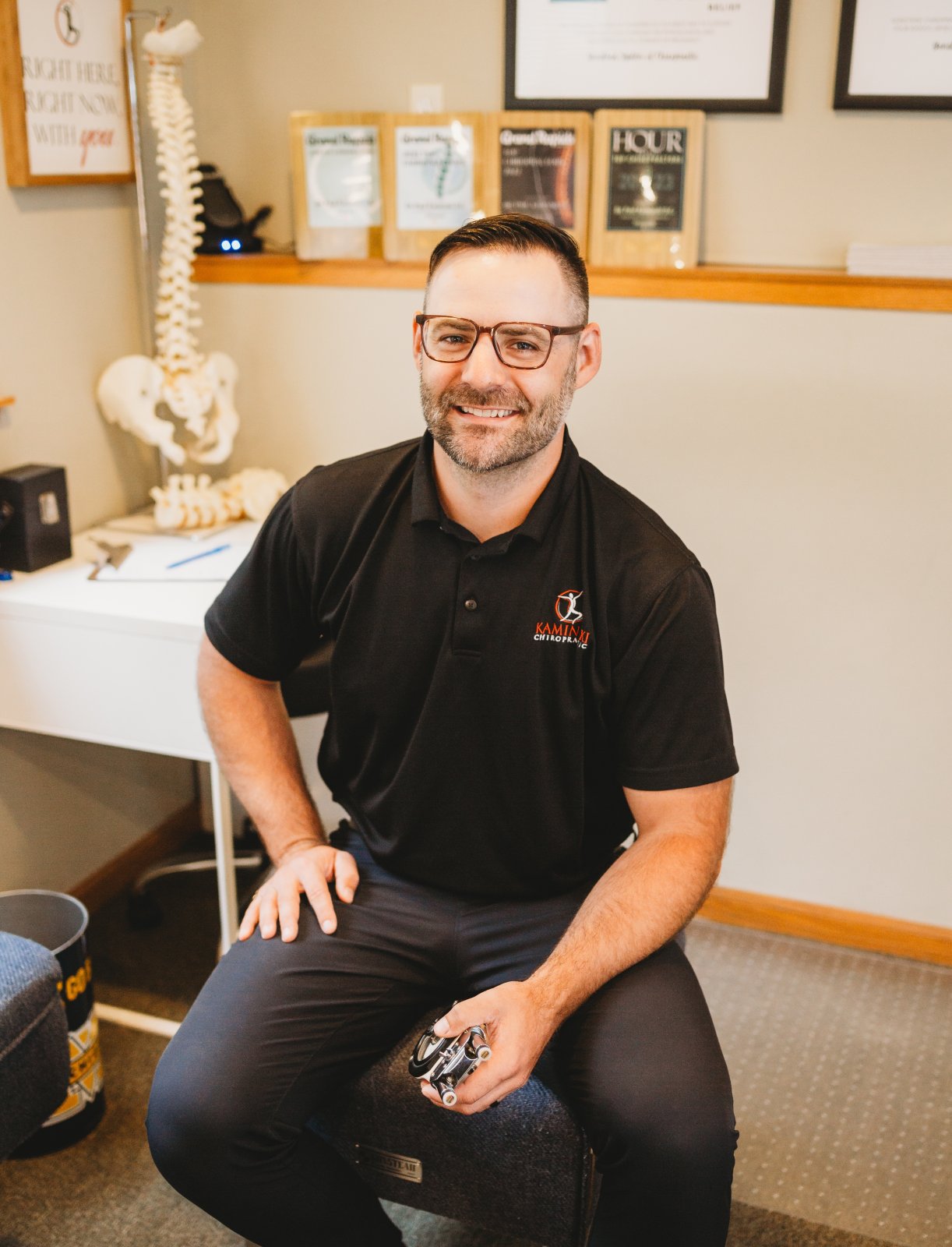
Here is the process, step by step:
- History and symptom review. We ask where the pain travels and what makes it worse.
- Visual and palpation exam. We check posture, range of motion, and tender areas.
- Thermal scanning. A heat-reading scan shows areas of nerve irritation along the spine.
- Full-spine X-rays. Imaging confirms alignment and helps rule out other causes.
- Specific adjustment. A precise, hands-on correction at the identified level.
The goal is a targeted adjustment at the identified level. If you want the full picture of the method and what a first visit looks like, learn what the Gonstead method involves.
Here is the five-part Gonstead process, step by step.
|
Step |
What happens |
|---|---|
|
History and symptom review |
Ask where pain travels and what makes it worse |
|
Visual and palpation exam |
Check posture, range of motion, tender areas |
|
Thermal scanning |
Heat-reading scan shows areas of nerve irritation |
|
Full-spine X-rays |
Imaging confirms alignment and rules out other causes |
|
Specific adjustment |
Precise, hands-on correction at the identified level |
Stretches, Home Care, and Habits That Protect Your Recovery
Daily habits decide whether relief holds, but home care for sciatica needs guardrails. The goal is gentle movement that keeps the nerve calm, not stretching through pain to force a result.
Start with activity you can tolerate:
- Walk short and often. Ten minutes, two or three times a day, is a reasonable starting point. Increase only if symptoms stay stable.
- Stretch gently. A figure-four stretch and a seated hamstring stretch, held 20 to 30 seconds, are common options. Stop at mild tension.
- Fix your desk setup. Screen at eye level, feet flat, lower back supported.
- Stand every 30 minutes. Set a timer if you forget.
- Sleep with a pillow between your knees. It keeps the spine neutral.
Watch out: pushing into sharp, shooting pain during a stretch can irritate the nerve further. Stretch to mild tension, not to pain. Stop an exercise and seek assessment if it brings on new numbness, weakness, or pain that travels farther down the leg.
Home care has limits. If leg pain keeps returning, limits your walking, or has not eased after a couple of weeks, that is a signal to get the source checked rather than keep improvising. A chiropractor can assess whether the driver is spinal alignment, disc pressure, or muscle tension, and can tell you when a referral to physical therapy or a specialist makes more sense.
For a desk-friendly routine with hold times, follow these lower back stretches for office workers.
Requesting Your First Sciatica Evaluation in Grand Rapids
If leg pain has been steering your days, it is worth getting the source checked. Our Gonstead-focused practice uses full-spine X-rays and thermal scanning to find the cause. Dr. Paul Kaminski brings over a decade of experience and has been recognized among Grand Rapids Magazine’s Top Chiropractors.
If you are searching for a chiropractor near me in Grand Rapids, MI, start with a proper evaluation. Request your first appointment and get a clear answer on what is driving the pain.
Frequently Asked Questions
Can a chiropractor take care of sciatic nerve pain?
A chiropractor can evaluate whether spinal misalignment or joint restriction is contributing to your sciatic nerve irritation and, if so, use manual adjustments and supporting therapies to reduce that pressure. Sciatica has several causes, including disc herniation, stenosis, and muscle tightness, so the first visit should include a physical examination and, where needed, imaging. Chiropractic care is one conservative option among several, and a qualified provider will tell you if your case needs a different pathway.
How long does it take to see sciatica relief with chiropractic care?
Response varies by cause and severity. Some people notice less leg pain within a few visits, while others need several weeks of consistent care before functional improvement shows. Acute cases often settle faster than chronic or recurring symptoms tied to disc changes. Your treatment plan should set checkpoints so you and your chiropractor can judge whether you are responding and adjust the approach if you are not.
Is it safe to see a chiropractor for sciatica symptoms?
For most people without red flags, chiropractic care for sciatica is considered a low-risk conservative option, though mild soreness after an adjustment is common. Safety depends on proper screening. Tell your provider about numbness in the groin, loss of bladder or bowel control, progressive muscle weakness, fever, or pain after major trauma, since those need urgent medical evaluation rather than routine care. A thorough initial assessment is what makes the difference.
What should I expect during my first chiropractic visit for sciatica in Grand Rapids?
Expect a consultation, a physical examination including range of motion and orthopedic tests, and a review of your symptom pattern. A Gonstead-focused practice may also take full-spine X-rays and use thermal scanning to locate areas of nerve irritation. You should leave with an explanation of what is likely driving your symptoms, a proposed treatment plan, and clear guidance on home care and when to return.
Sciatica rarely fixes itself overnight, and guessing at the cause wastes time you could spend recovering. Kaminski Chiropractic offers precise Gonstead analysis, full-spine imaging, and hands-on adjustments tailored to your exam findings. Get started with Kaminski Chiropractic and take the first step toward moving freely again.
