
Last Updated: November 4, 2026
Quick Summary
An upper cervical chiropractor in Grand Rapids focuses on the atlas and axis, the two vertebrae at the top of the spine, to find and correct subluxations that can cause symptoms far from the neck. At Kaminski Chiropractic, care starts with a five-step assessment, including thermal scanning and full-spine X-rays, before any adjustment is made.
- The atlas and axis allow roughly half of your neck’s total rotation.
- A first visit follows five assessment steps, and nothing is adjusted until the report of findings.
- Our practice is Gonstead-focused, using full-spine X-rays and thermal scanning before any correction.
- Mild soreness for a day or two after an adjustment is common and usually mild.
Table of Contents
- What Upper Cervical Chiropractic Care in Grand Rapids Looks Like
- Upper Cervical Chiropractic vs. Traditional Chiropractic
- What to Expect at a Chiropractic Appointment
- Conditions Treated: Migraines, Vertigo, and Neck Pain
- Finding an Upper Cervical Chiropractor Near Me in Grand Rapids
- Post-Adjustment Recovery
- Request an Appointment at Kaminski Chiropractic
- Frequently Asked Questions
What Upper Cervical Chiropractic Care in Grand Rapids Looks Like
Upper cervical chiropractic care is a precise, non-invasive approach that focuses on the two vertebrae at the very top of the spine. At Kaminski Chiropractic in Grand Rapids, MI, we evaluate how those top bones sit and move to determine whether a correction is needed.
The word “upper cervical” refers to the uppermost section of the cervical spine. It is a small area with an outsized job: it supports your head, protects the lower brainstem, and influences how the rest of the spinal column carries your body weight.
Many people arrive at our office after years of chasing symptoms. The headaches were treated as stress. The dizziness was blamed on dehydration. The neck stiffness was accepted as part of getting older.
Below, we explain how this care works, how it differs from general chiropractic, and what a first visit involves.
The Atlas and Axis: Why the Top of the Spine Matters
The atlas (C1) is the first vertebra, a ring-shaped bone that cradles the base of the skull. The axis (C2) sits directly beneath it and provides the pivot that lets your head rotate.
That mobility comes with a trade-off. Because these vertebrae move more than any others in the cervical spine, they are also more vulnerable to displacement from falls, car collisions, sports impacts, and repetitive postural strain.
A subluxation is a misalignment or abnormal motion of a vertebra that affects how the joint and surrounding nerves function (pubmed.ncbi.nlm.nih.gov).
That adaptation is why symptoms can appear in the shoulders, lower back, or hips rather than at the neck. The body protects the head at all costs, and it will distort other structures to do it.
Upper Cervical Chiropractic vs. Traditional Chiropractic
The clearest difference between upper cervical chiropractic and traditional chiropractic is where the work happens and how the correction is made. Traditional chiropractic often addresses multiple regions of the spine with manual manipulation. Upper cervical care concentrates on the atlas and axis.
Neither approach is universally better. They answer different questions. Traditional care can be a good fit for broad musculoskeletal complaints, while upper cervical work suits patients whose symptoms trace back to the top of the neck, especially neurological symptoms like dizziness or persistent headaches.
A common mistake we see is a patient assuming all chiropractic care is the same. It is not. If you have been adjusted before and felt temporary relief that faded within days, the missing piece may not be the technique itself but the specificity of the analysis behind it.
What to Expect at a Chiropractic Appointment
A first appointment at our Grand Rapids office centers on assessment, not treatment.
Step 2: Postural and functional examination. We examine posture and cervical range of motion as part of the assessment.
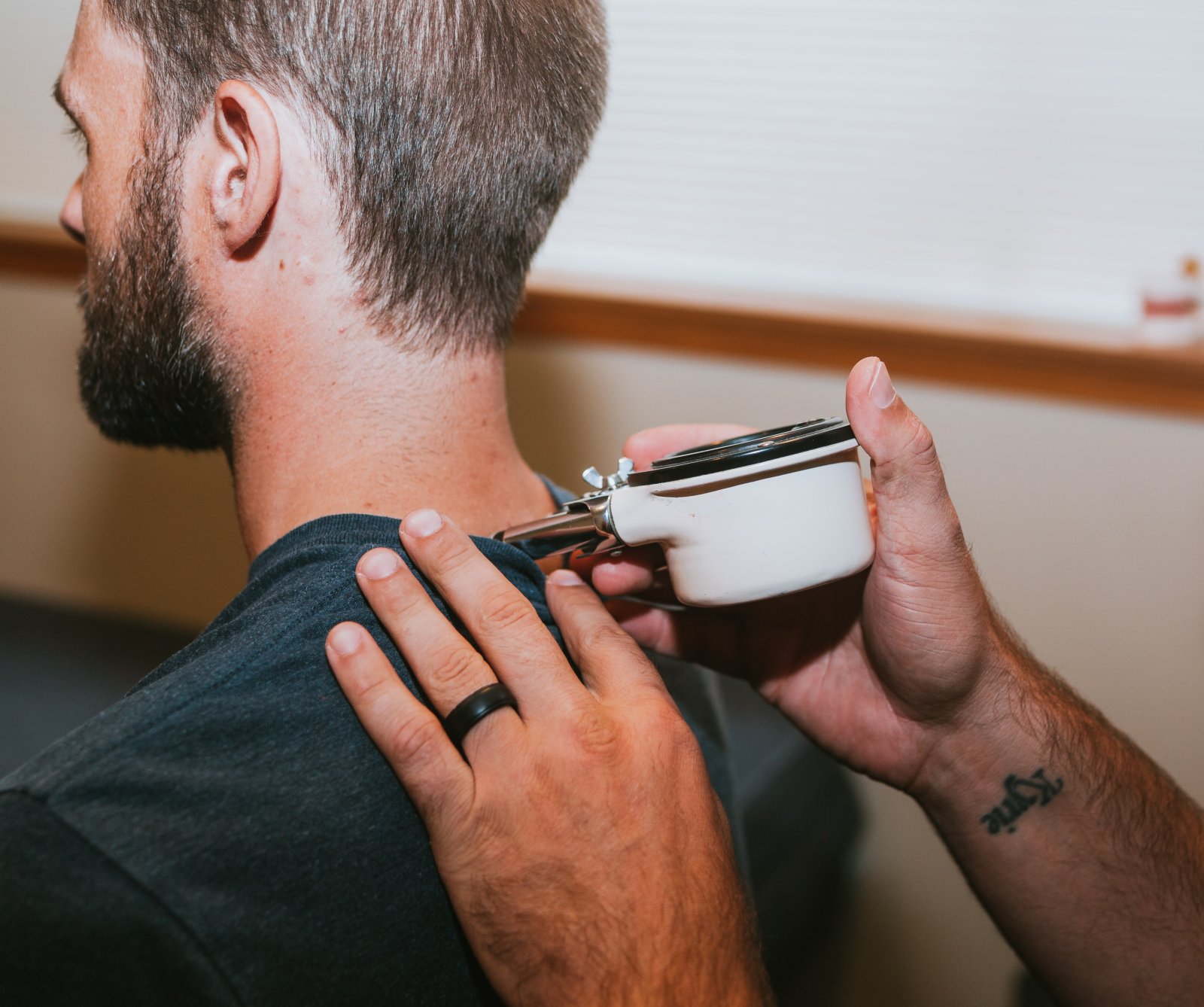
Step 3: Thermal scanning. Thermal scanning measures heat differentials along the spine. It is not a diagnosis on its own.
Step 4: Imaging. If your history and exam point to the upper cervical spine, we take full-spine X-rays.
Step 5: Report of findings. Before any adjustment, we sit down with you and explain what we found and what care would involve.
You can read more about the first visit on our What To Expect page. Come with questions.
Watch out: if a practice adjusts you on the first visit before taking imaging or explaining its analysis, ask why.
Precision Imaging and X-Ray Analysis
We use full-spine X-rays along with thermal scanning as part of our analysis.
A first visit follows a fixed sequence of assessment steps before anything is adjusted.
|
Step |
What happens |
|---|---|
|
Step 1 |
Health history and symptom intake |
|
Step 2 |
Postural and functional examination |
|
Step 3 |
Thermal scanning of heat differentials along the spine |
|
Step 4 |
Full-spine X-rays if history and exam point upper cervical |
|
Step 5 |
Report of findings before any adjustment |
Conditions Treated: Migraines, Vertigo, and Neck Pain
Three complaints bring people to upper cervical care more than any others: migraines, vertigo, and neck pain. Each has a plausible mechanical link to the top of the spine, though not every case will have that cause.
Migraine care is one of the reasons patients seek our care. Patients have told us they assumed their headaches were just part of their life now.
Vertigo involves a false sense of movement, often spinning (Balance Disorders, Causes, Types & Treatment). It should be evaluated properly before treatment.
Neck pain is the most direct connection.
You can read more about our headache and migraine care in Grand Rapids, our vertigo treatment in Grand Rapids, and our neck pain treatment in Grand Rapids.
Watch out: vertigo accompanied by sudden severe headache, double vision, slurred speech, weakness, or difficulty walking needs prompt medical attention, not a chiropractic appointment. Those signs can indicate a serious neurological event.
Finding an Upper Cervical Chiropractor Near Me in Grand Rapids
If you are searching for an upper cervical chiropractor near me in Grand Rapids, look for a clear analytical process and an honest explanation of what the provider can and cannot do. Ask how the practice determines where to adjust. If the answer is vague, keep looking.
The Gonstead system is one method built around that specificity. It uses a five-component analysis, including full-spine X-rays and thermal scanning, before any correction is made. Our practice is Gonstead-focused, and Dr. Paul Kaminski is affiliated with the Gonstead Clinical Studies Society and the Michigan Association of Chiropractors.
Ask about experience with your specific situation, too. A provider who mainly treats athletes may not be the right fit for a patient with vertigo, and vice versa.
Post-Adjustment Recovery
Most upper cervical content stops at the adjustment. What happens in the 24 hours after matters just as much, and so does knowing what the care will cost before you start.
The First 24 Hours After an Adjustment
Many patients feel immediate change, while others notice improvement over the following days as the muscles and joints adapt. Soreness for a day or two is common and usually mild. A common pattern is a sense of lightness or ease in the neck within the first hour, followed by muscle soreness later that evening as the body recalibrates.
What helps in the first 24 hours:
- Light movement over rest. A short walk, gentle range-of-motion through the neck and shoulders, and normal daily activity support the correction. Prolonged bed rest is not recommended.
- Hydration. Drink water normally through the day. Dehydration can make muscles feel tighter and mimic post-adjustment soreness.
- Posture awareness. Pay attention to how you sit at a desk, how you hold your phone, and how you sleep. Postural correction between visits supports the work done in the office.
- Heat, not ice, for mild soreness. A warm shower or heating pad on tight muscles is generally more comfortable than ice for post-adjustment stiffness.
What to avoid in the first 24 hours:
- Heavy lifting, especially overhead or asymmetric loads.
- Prolonged static postures, such as long drives or hours at a desk without moving.
- High-impact activity or contact sports on the day of the adjustment.
- Sleeping on your stomach, which rotates the neck and can undo the correction overnight.
Watch out: if you experience severe headache, new numbness or weakness, dizziness that worsens rather than settles, or any symptom that feels clearly different from mild soreness, call the office rather than waiting it out.
How Often Will I Need to Come In?
Visit frequency depends on your case, and we will not quote a number before the examination. What we can tell you is the general pattern: upper cervical care typically starts with more frequent visits to establish stability, then tapers as the correction holds. The goal is not a fixed number of visits but a spine that stays corrected between them. We reassess with the same scans and imaging used at the start, so progress is measured rather than assumed.
Request an Appointment at Kaminski Chiropractic
The gap between “I’ve tried everything” and real relief is often just a more precise diagnosis. Our patients describe the difference in plain terms: being listened to, being fitted in when something flares up, and finally understanding what was actually wrong.
If you have been living with headaches, dizziness, or neck pain and want an evaluation rather than another guess, we are glad to help. Kaminski Chiropractic offers Gonstead-focused analysis with full-spine X-rays and thermal scanning, hands-on care tailored to your case, and more than a decade of experience serving Grand Rapids. Dr. Kaminski was recognized in Grand Rapids Magazine’s Top Chiropractors in 2022.
Book a chiropractic appointment in Grand Rapids and take the first step toward getting out of pain and back to the things you have been avoiding.
Frequently Asked Questions
Does upper cervical chiropractic really work?
Upper cervical chiropractic focuses on the atlas and axis. Results vary by individual. Research on upper cervical techniques continues to grow, though it is not a guaranteed cure. A thorough assessment with precision imaging helps determine if this approach suits your specific condition. Consult a qualified upper cervical chiropractor in Grand Rapids to discuss your health history and goals.
What is the difference between a chiropractor and an upper cervical chiropractor?
A traditional chiropractor may use diversified adjustments across the entire spine, often with manual manipulation that produces a cracking sound. An upper cervical chiropractor specializes in the atlas and axis, using precision imaging and gentle, targeted corrections without twisting or cracking. This narrower focus aims to address the root cause of nerve interference rather than just treating symptoms. Training and technique vary, so ask about the practitioner’s specific protocol and experience with upper cervical care.
How do I choose an upper cervical chiropractor in Grand Rapids, MI?
Look for a provider who performs a detailed patient assessment, including full-spine X-rays and thermal scanning, to guide precise adjustments. Ask about their technique, such as Gonstead or NUCCA, and whether they have experience with your specific condition. Check credentials, patient reviews, and whether they explain the care plan and costs upfront. A good fit will answer your questions clearly and involve you in decisions. Schedule a consultation to see if their approach matches your needs.
Is Gonstead chiropractic the same as upper cervical chiropractic?
Gonstead is a full-spine technique that emphasizes precise, hands-on adjustments based on thorough analysis, including X-rays and thermal scans. Upper cervical chiropractic is a subset focused specifically on the atlas and axis. Some practices, like Kaminski Chiropractic, use the Gonstead system to address the entire spine, which can include upper cervical corrections. The two are not identical, but a Gonstead-trained chiropractor may incorporate upper cervical principles. Ask about the provider’s specific training and how they tailor care to your spine.
