
Table of Contents
- Understanding the Gonstead Technique for Back Pain
- The Five Components of Gonstead Analysis
- Gonstead Adjustment for Lower Back Pain
- What to Expect From a Gonstead Adjustment
- Gonstead vs. Traditional Chiropractic
- Gonstead Chiropractic Safety and Who It Suits
- Frequently Asked Questions
Last Updated: October 19, 2026
Understanding the Gonstead Technique for Back Pain
The Gonstead technique is a system of chiropractic analysis and spinal adjustment built on the idea that a specific, mechanically correct correction beats a general one. At Kaminski Chiropractic, we use this method because back pain rarely comes from “the whole spine being out”, it comes from one or two segments that are interfering with the nervous system, and the rest of the body compensated. (Source: the National Institute of Neurological Disorders and Stroke)
A general adjustment loosens several joints and hopes the body sorts itself out. The Gonstead technique for back pain asks the opposite question: which single vertebra lost its normal position and motion, and in which direction?
The word subluxation gets used loosely in chiropractic marketing. Here it means a vertebra that has lost normal alignment or movement and is interfering with how surrounding joints and nerves behave.
How the Gonstead Method Differs From General Adjustments
Most chiropractic visits involve a quick full-spine series of cracks, often with the patient face down and the doctor working by feel alone.
The difference isn’t the crack, it’s the target. A precise adjustment delivers force to one segment in one direction; a general one distributes force across a region. For a stiff, otherwise healthy spine, either can feel fine.
The Five Components of Gonstead Analysis
Gonstead analysis rests on five checks that must agree before an adjustment is given. When they don’t agree, we don’t adjust that segment.
|
Component |
What It Looks At |
What It Rules Out |
|---|---|---|
|
Visualization |
Posture, stance, gait, leg length |
Gross postural and pelvic asymmetry |
|
Instrumentation |
Heat patterns along the spine |
Areas of active inflammation or nerve irritation |
|
Static palpation |
Swelling, tenderness, muscle tone at rest |
Acute tissue irritation at a specific level |
|
Motion palpation |
How each joint moves through its range |
The exact segment and direction of restriction |
|
X-ray examination |
Alignment, disc space, bone structure |
Fracture, structural change, contraindications |
Any one finding can mislead: a tender spot might be a muscle strain, not a joint problem, and a postural tilt might come from a short leg, not a misalignment. Agreement across five checks separates a diagnosis from a guess.
Source: https://gonstead.com/overviews-of-gonstead-technique/
Visualization, Instrumentation, and Static Palpation
Visualization starts the moment you walk in: how you stand, shift weight, carry your shoulders, and walk.
Instrumentation typically means a thermal scan along the spine. Skin temperature changes over areas of nerve irritation, giving an objective map rather than relying on where you point.
Static palpation is hands-on assessment at rest: feeling for swelling, taut muscle bands, and point tenderness at each level.
Motion Palpation and X-Ray Examination
Motion palpation is the most demanding part of the exam. We move each joint through its range and feel for the one that stops short, moves too far, or moves in the wrong direction.
X-rays serve two purposes here. The first is safety: ruling out fracture, significant structural change, or anything that means the spine shouldn’t be adjusted at all.
X-rays have real limits. They show bone and joint position well but not nerves, soft-tissue disc detail, or pain.
Gonstead Adjustment for Lower Back Pain
A Gonstead adjustment for lower back pain is a controlled, specific thrust to one segment, usually side-lying with the table dropping beneath the contact to reduce the force needed.
Lower back cases are where precision earns its keep. The lumbar spine carries most of your body weight, and the segments sit close together.
In practice, the setup takes longer than the thrust: positioning, contact point, and the direction of the line of drive are worked out before anything happens.
We also assess the pelvis alongside the lumbar spine.
What to Expect From a Gonstead Adjustment
Your first visit is mostly assessment: a health history covering past injuries, current symptoms, medications, prior surgeries, and anything that might make adjustment unsuitable, followed by the five-component exam and, where indicated, X-rays.
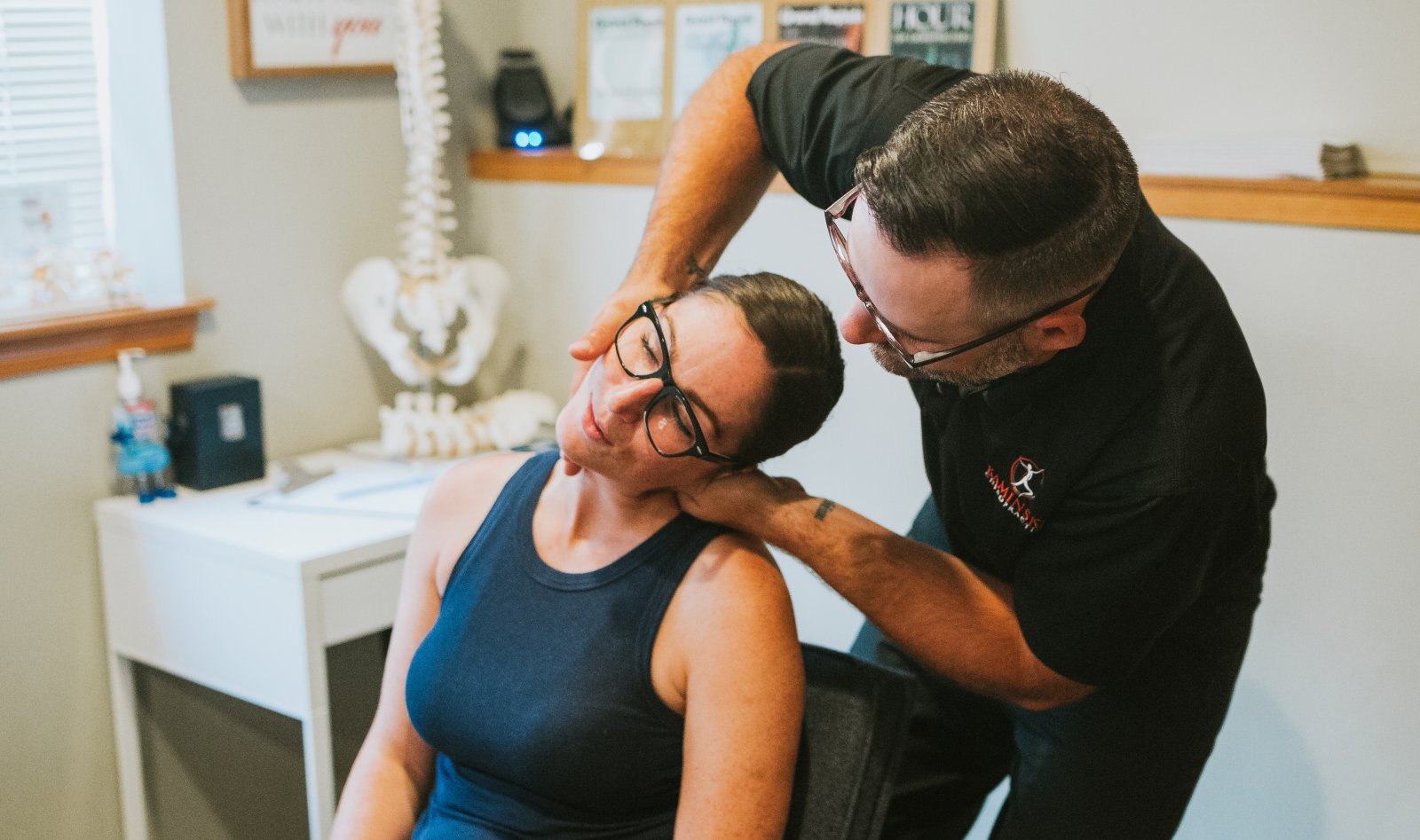
Dr. Kaminski adjusting a patient’s atlas vertebrae in the cervical chair – a staple in the Gonstead system.
The adjustment itself takes minutes. You’ll typically lie on your side with a pillow between your knees while the doctor positions your hips and lower back, then delivers a short, controlled thrust.
Costs, Frequency, and Measuring Progress
At Kaminski Chiropractic, we operate outside of insurance networks. You can submit to your insurance company to be applied to your out-of-network benefits. You can also use an HSA or an FSA. We offer prepay plans as well that lower your cost per visit.
Progress should be measured, not felt. Reasonable markers include:
- Change in range of motion at the identified segment on repeat motion palpation
- Change in a validated functional score (for example, a low-back disability index) recorded at intake and at reassessment
- Days between flare-ups, and how quickly a flare settles
No standard visit count fits every case, and any clinic quoting one before examining you is guessing.
Afterward, expect home guidance, usually movement or stretching rather than rest. Mild soreness for a day or so is common and generally settles. Follow-up visits reassess the same five components to see whether the correction held, that’s how progress gets measured, not by how you feel on any single day.
Gonstead vs. Traditional Chiropractic
The honest comparison comes down to assessment depth and adjustment specificity, not to one being “real” chiropractic. Both are forms of spinal manipulation delivered by licensed chiropractors, and both can help with mechanical back pain.
Traditional practice often emphasizes regional or full-spine adjusting, shorter visits, and schedules built around symptom relief.
Which suits you depends on your case. If you have a clear mechanical problem in one or two segments and want it identified and corrected, the specificity is worth the extra assessment.
Gonstead Chiropractic Safety and Who It Suits
Gonstead chiropractic safety rests on the same principle as any manipulation: proper screening first. The five-component exam exists partly to catch cases where adjusting is the wrong move, and the X-ray requirement adds a structural check that many practices skip.
Serious adverse events from spinal manipulation are uncommon but not zero. During your evaluation, Dr. Kaminski will determine your risk factors and mitigate any possibilities that could result in a negative outcome. If there are contraindications, those will be communicated and referral for appropriate care will be made. (Adverse effects of spinal manipulation: a systematic review).
What the Evidence Does and Does Not Show
Separate two questions. First, does spinal manipulation in general help low-back pain? Major health bodies and clinical guidelines generally support manual therapy, including spinal manipulation, as a reasonable option for acute and chronic low-back pain, often alongside exercise and education.
That doesn’t make the method unreasonable. The honest framing: the general category has support, the specific technique is plausible and widely used, and no one should promise a cure. Expect improvement in pain and function to be measured, not guaranteed.
Common Side Effects and Contraindications
Temporary soreness for a day or two is the most common side effect, similar to what follows a new exercise. Less commonly, people report transient stiffness, fatigue, or mild headache. These usually settle on their own; persistent or worsening symptoms should be reported.
Adjustment is generally avoided or modified when there is:
- Acute fracture, dislocation, or significant spinal instability
- Active infection of the spine or surrounding tissue
- Severe osteoporosis or conditions that weaken bone
When to Seek Medical Care First
Seek medical care first if you have unexplained weight loss, fever with back pain, loss of bladder or bowel control, groin numbness, progressive leg weakness, or pain following significant trauma, red flags for something manipulation won’t fix. New or severe back pain after a fall, or pain that wakes you at night and doesn’t ease with position change, also warrants medical evaluation before any manual care.
Who the Technique Tends to Suit
The technique suits many people: desk workers with postural pain, athletes managing recurrent strain, and expectant mothers with pregnancy-related pelvic and low back discomfort, with positioning modified for comfort and stage. It’s generally not the first choice for acute fracture, active infection, or significant instability, and we refer out when the exam points that way. The right question isn’t whether Gonstead is good or bad in the abstract, but whether your specific presentation, history, exam findings, and imaging, makes a precise, segment-specific adjustment a sensible part of your care plan.
We tend to see a high number of cases of patients who have been to other chiropractors and did not have success with their treatment. We’ve had a lot of success treating difficult or complex cases.
If you’ve been told your pain is just part of getting older, that’s worth a second look. Persistent neck and back pain has mechanical causes that can be identified, and a proper workup tells you whether yours is one of them.
Frequently Asked Questions
What’s the difference between Gonstead and traditional chiropractic?
Traditional chiropractic often relies on broader spinal manipulation, sometimes with less imaging or analysis beforehand. The Gonstead technique uses a five-part assessment that includes full-spine X-rays, thermal instrumentation, and both static and motion palpation to pinpoint a specific vertebral subluxation. Adjustments are then delivered with minimal force and maximum precision, rather than a general twist of the spine. This detailed workup is what separates a Gonstead adjustment from a routine adjustment.
Is the Gonstead technique safe for back pain?
The Gonstead technique is generally considered safe for most people when performed by a licensed chiropractor after a proper examination. Because it uses precise, low-force adjustments rather than forceful twisting, many patients find it comfortable. However, it is not appropriate for everyone. People with severe osteoporosis, spinal fractures, certain cancers, or active infections should consult their doctor first. Always disclose your full health history, medications, and any recent injuries before treatment so the chiropractor can screen for red flags.
How many Gonstead adjustments might be needed for back pain?
The number of visits varies based on the cause and duration of your back pain, your overall health, and how your body responds to care. Some people notice improvement within a few visits, while chronic or complex cases may need a longer course of care with periodic reassessment. A Gonstead chiropractor should outline an individualized treatment plan and adjust it based on your progress. Ask about expected visit frequency and how progress will be measured before you commit to a plan.
Can you feel sore after a Gonstead adjustment?
Mild soreness or stiffness for a day or two after an adjustment is common and usually resolves on its own. It often feels like the muscle soreness you get after exercise. Applying ice or heat, staying hydrated, and doing gentle movement can help. If soreness lasts longer than a few days or you notice new or worsening symptoms, contact your chiropractor. Severe pain, numbness, or weakness should be evaluated promptly by a medical professional.
What happens during a Gonstead chiropractic adjustment?
A Gonstead adjustment typically starts with a thorough history, physical examination, and often X-rays to identify the specific level and direction of spinal misalignment. The chiropractor uses instrumentation and palpation to confirm the findings. You will usually lie on a specialized adjusting table while the chiropractor applies a precise, controlled force to the affected vertebra. Many patients report little discomfort. The visit may also include advice on stretching, posture, and follow-up care to help maintain mobility and prevent recurrence.
Is it normal to feel emotional after a chiropractic adjustment?
Some people report feeling relaxed, tearful, or emotionally released after an adjustment. This is often attributed to the release of muscle tension and the nervous system settling after treatment. There is limited scientific research on this phenomenon, so it is best described as an individual experience rather than a guaranteed effect. If you feel emotional after a session, it is not unusual. Mention any concerning symptoms to your chiropractor, and seek medical advice if you feel unwell.