
Last Updated: November 3, 2026
Quick Summary
To find a pediatric chiropractor in Grand Rapids, compare local practices on stated pediatric focus, ages served, pricing transparency, and contact access before booking. Verify the treating doctor’s license and pediatric training, and confirm total first-visit costs, before you schedule.
- Kaminski Chiropractic uses a five-component Gonstead analysis that includes full-spine X-rays (if necessary) and thermal scanning.
- Ask which specific pediatric courses or certifications the treating doctor has completed before booking.
- See a pediatrician first for unexplained fever, sudden severe pain, or neurological symptoms like weakness.
Table of Contents
- Kaminski Chiropractic: Gonstead-Based Care for the Whole Family
- How to Evaluate a Pediatric Chiropractor Before You Book
- What to Expect and When to See a Pediatrician
- Frequently Asked Questions
Kaminski Chiropractic: Gonstead-Based Care for the Whole Family
Dr. Paul Kaminski uses the Gonstead system, a method built on precise, hands-on analysis rather than generalized adjustments. That matters for children, whose spines and joints should never receive a one-size-fits-all approach.
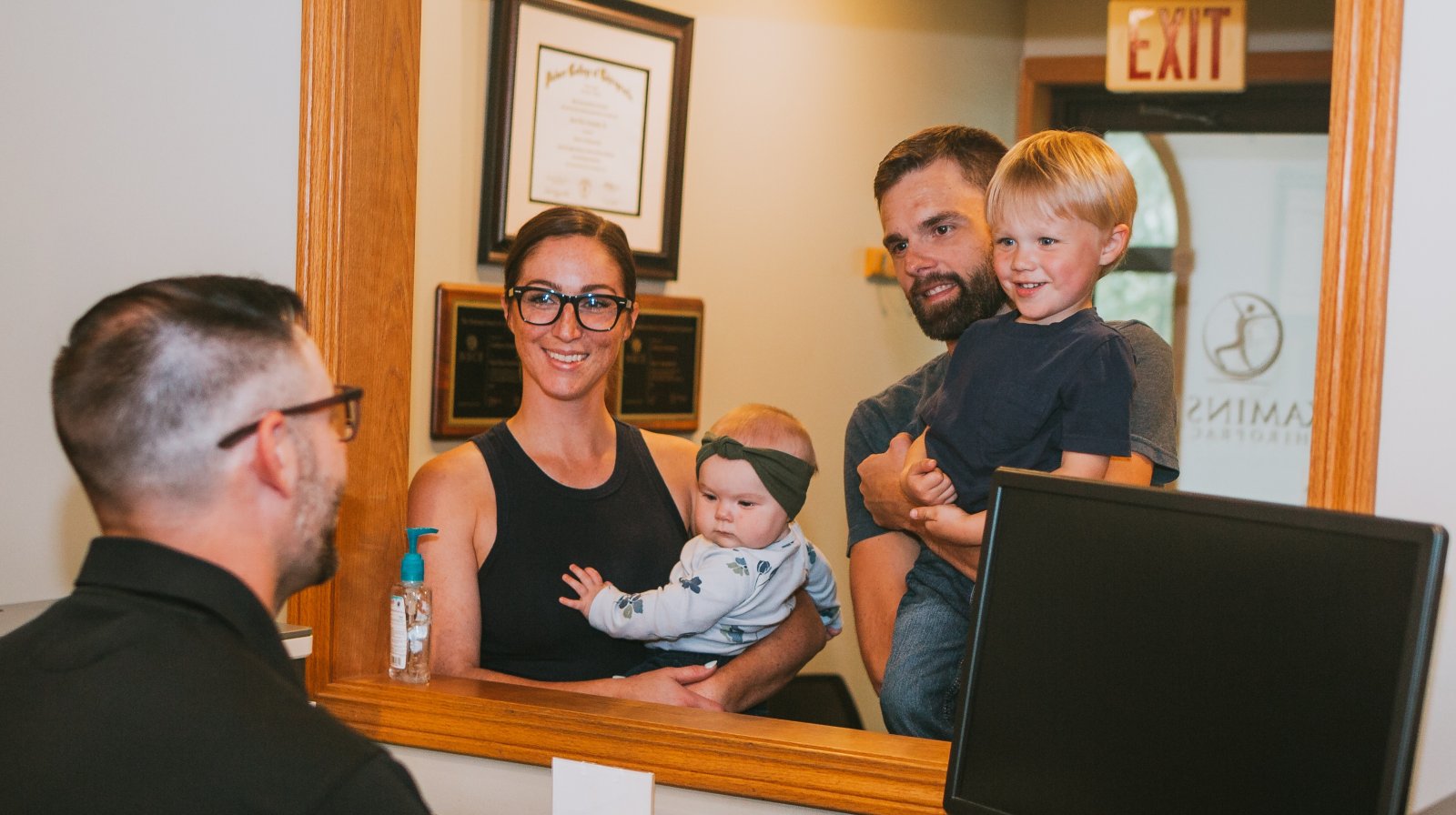
Our practice uses a five-component Gonstead analysis, which includes full-spine X-rays and thermal scanning. Dr. Kaminski has over a decade of experience and has been recognized in Grand Rapids Magazine’s Top Chiropractors list. Many people who visit us have previously tried other options.
If you are looking for care that treats your child as an individual, explore our pediatric chiropractic care in Grand Rapids and see how a first visit works.
How to Evaluate a Pediatric Chiropractor Before You Book
Credentials matter more than marketing copy, and in pediatric chiropractic the difference between a provider who regularly treats children and one who occasionally adjusts a child is usually visible in the questions they can answer specifically. Use this section as a screening script before you book, not after.
Verify the license first. Chiropractors practicing in the United States must hold a license from the state board that regulates chiropractic in the state where they practice.
Ask what pediatric training actually consists of. Chiropractic doctoral programs include limited pediatric coursework, and pediatric depth usually comes from post-graduate continuing education, certification programs, or mentorship.
Ask how technique changes by age. A provider who works with children should be able to explain, in plain language, how force, positioning, and assessment differ for a six-week-old, a five-year-old, and a teenager.
Ask about scope and coordination. Pediatric chiropractors are not pediatricians, and a good one will say so. Ask whether the practice routinely communicates with a child’s primary-care clinician when a concern falls outside musculoskeletal care, and how they handle a finding that needs medical follow-up.
Ask what the first visit includes and what it costs in total. Request the exam fee, any imaging or scanning fees, and the per-visit rate for ongoing care before the appointment. Ask whether a treatment plan will be proposed in writing and whether you can decline ongoing care after the exam.
Ask how progress will be measured. A reasonable provider will describe functional goals, comfort, movement, sleep, participation in normal activity, and a timeframe for reassessment. Be cautious of a plan that recommends a long course of visits before any exam has taken place.
Watch out: a practice that cannot or will not name the treating doctor’s pediatric training, license status, or total first-visit cost is a signal to keep calling. Those are basic questions, and a provider who works with children regularly should answer them without friction.
A child’s first chiropractic appointment usually starts with a consultation and health history, followed by an exam and, only if appropriate, a gentle adjustment.
What to Expect and When to See a Pediatrician
A first pediatric chiropractic visit typically follows a predictable sequence: a consultation and health history, a physical and neurological exam, a discussion of findings, and, only if the exam supports it, a gentle, age-appropriate adjustment. What varies most between practices is how thoroughly the exam is documented and how clearly the provider explains what they found and what they recommend.
When to see a pediatrician or seek urgent care first. Chiropractic care is not appropriate for every situation.
Contraindications to raise with the provider. Certain conditions make spinal manipulation risky, including unstable spinal conditions, bone disease, active infection near the spine, and some bleeding disorders. Tell the provider about any diagnosed medical condition, recent injury, surgery, or medication your child takes, and ask directly whether anything in your child’s history would make adjustment inappropriate.
How to coordinate with your child’s pediatrician. Before booking, ask the chiropractor whether they will send findings to your child’s primary-care clinician and whether they welcome a call from that office. If your child is being treated for a medical condition, tell the pediatrician that you are considering chiropractic care and ask whether there are any precautions.
What to bring and what to expect by age. Bring a list of medications, allergies, prior injuries, and any relevant medical records, along with the name and contact information for your child’s pediatrician. For infants, bring feeding and sleep notes and be prepared to hold your child during the exam.
Watch out: if a provider discourages you from seeing a pediatrician, dismisses a medical concern as something chiropractic will fix, or recommends a long treatment plan before examining your child, treat that as a reason to pause. The right provider will welcome medical coordination and will tell you plainly when a concern is outside their scope.
Frequently Asked Questions
Is there a pediatric chiropractor in Grand Rapids?
Yes. Several Grand Rapids practices advertise pediatric care. Kaminski Chiropractic offers family care using the Gonstead system where individualized care is prioritized over cookie cutter treatment plans.
Is it safe for kids to get adjusted by a chiropractor?
Pediatric chiropractic typically uses gentle, low-force techniques rather than the forceful adjustments adults receive. Safety depends on the provider’s training, a thorough assessment, and age-appropriate technique. Ask about credentials and experience with children, and tell the chiropractor about any medical conditions.
What should parents ask a pediatric chiropractor before booking?
Ask about the provider’s training in pediatric care, how many children they treat and in what age range, which techniques they use for infants versus teens, and what the first visit includes. Also ask about exam fees, insurance billing, and how many visits they typically recommend. A trustworthy provider welcomes these questions and explains findings clearly before recommending any care plan.
What happens at a child’s first chiropractic appointment?
A first visit usually starts with new-patient paperwork and a conversation about your child’s health history, symptoms, and goals. The chiropractor then performs an assessment, which may include posture checks, range-of-motion testing, and sometimes imaging. Treatment, if appropriate, uses gentle techniques suited to the child’s age. Expect the visit to take longer than follow-ups, and bring any relevant medical records or imaging.
If you have been putting off care because you are not sure who to trust with your child, start with a conversation. At Kaminski Chiropractic, Dr. Paul Kaminski uses the Gonstead system with full-spine analysis, over a decade of family practice, and a hands-on approach tailored to each child’s age and needs. Get started with Kaminski Chiropractic and request an appointment to see how gentle, precise care can support your family’s health.
