
Last Updated: November 9, 2026
Quick Summary
Plantar fasciitis in Grand Rapids can be treated by Dr. Paul Kaminski at Kaminski Chiropractic. Treatment typically involves and combination including evaluation of the spine, hips, knees, ankles and feet to correct biomechanical issues, soft tissue work and sometimes cold laser therapy. Most cases improve with conservative care, often within four to eight weeks.
- First-step heel pain is the classic sign of plantar fasciitis.
- Most cases improve without surgery using load management, stretching and supportive footwear.
- Many patients notice meaningful improvement within four to eight weeks of consistent conservative care.
- Full resolution often takes three to six months, with gradual ups and downs.
- Kaminski Chiropractic offers a no-cost consultation using the Gonstead technique.
Table of Contents
- Plantar Fasciitis: What Causes That First-Step Heel Pain
- Diagnosis and Clinical Evaluation for Heel and Arch Pain
- Plantar Fasciitis Recovery Time and Realistic Outcomes
- Natural Remedies for Heel Pain You Can Start This Week
- Why a Chiropractor for Foot Pain Grand Rapids Residents Trust
- Reducing the Risk of Heel Pain Coming Back
- Requesting Your Consultation at Kaminski Chiropractic
- Frequently Asked Questions
Plantar Fasciitis: What Causes That First-Step Heel Pain
Plantar fasciitis is inflammation of the plantar fascia, the thick band of tissue that runs along the bottom of your foot and connects your heel bone to your toes (Plantar Fasciitis and Bone Spurs – OrthoInfo). That sharp pain with your first steps in the morning is the classic sign. Understanding what drives this pattern is the first step toward lasting relief.
The plantar fascia acts like a shock-absorbing bowstring. When it is overstretched or repeatedly stressed, small tears form at the heel attachment, and the tissue becomes irritated. The result is heel discomfort that tends to be worst right after rest.
Heel and Arch Symptoms to Watch For
The telltale symptom is first-step pain: a stabbing sensation in the heel when you get out of bed or stand after sitting. Arch pain, stiffness, and tenderness along the sole of the foot are also common. Some people notice the pain eases after a few minutes of walking, only to return after prolonged standing.
Pain that comes with numbness, tingling, or swelling in the ankle is not typical of plantar fasciitis and deserves prompt evaluation by a clinician.
Flat Feet, Foot Mechanics, and Overstretched Arches
Foot mechanics play a major role. Flat feet or a high arch can change how weight distributes across the plantar fascia, and an overstretched arch places extra strain on the tissue with every step. Supportive footwear and arch support help many people manage this mechanical load, but the right approach depends on your individual foot structure.
Diagnosis and Clinical Evaluation for Heel and Arch Pain
A proper diagnosis starts with a clinical evaluation, not a guess. A clinician reviews your symptoms, examines how you stand and walk, and checks calf flexibility and arch support. Imaging is sometimes used to rule out other causes, such as a stress fracture or nerve entrapment.
The American Academy of Orthopaedic Surgeons overview of plantar fasciitis notes that most cases improve with conservative treatment, which is why an accurate diagnosis matters before any plan begins. A foot and ankle specialist or orthopedic surgeon may be involved when symptoms are persistent or atypical.
What the evidence supports most strongly
Most practitioners find that the highest-yield conservative measures are load management, targeted stretching of the plantar fascia and calf, and supportive footwear or off-the-shelf arch supports. The American Academy of Orthopaedic Surgeons overview of plantar fasciitis notes that the large majority of cases improve without surgery, which is why these low-risk steps are usually tried first. Night splints, which hold the foot in a stretched position overnight, are commonly used for stubborn first-step pain. Soft-tissue therapy and manual therapy are often added for tight calf and arch tissue, though response varies from person to person. Readers exploring soft-tissue treatment for plantar fasciitis can learn about IASTM therapy in Grand Rapids.
What each type of clinician focuses on
A podiatrist typically leads with foot-specific mechanics: footwear assessment, custom orthotics when off-the-shelf inserts are not enough, and soft-tissue or injection-based care for persistent cases. An orthopedic surgeon or foot and ankle specialist is usually involved when the diagnosis is uncertain, when symptoms persist despite months of conservative care, or when imaging suggests a structural problem. Chiropractic care approaches the foot as part of a larger mechanical chain, looking at calf tightness, ankle motion, and spinal alignment that may change how weight loads through the arch.
|
Care Option |
Typical Focus |
Best For |
|---|---|---|
|
Podiatry |
Footwear, orthotics, soft-tissue therapy, injections |
Localized heel and arch pain that has not responded to basic self-care |
|
Orthopedics |
Structural evaluation, imaging, surgical options |
Persistent, atypical, or complex cases |
|
Chiropractic care |
Whole-body mechanics, alignment, soft-tissue work |
Recurring pain linked to calf tightness or movement patterns |
How clinicians choose among options
A common pattern is a stepwise approach: start with self-care and footwear changes, add guided stretching and soft-tissue work, then consider orthotics, night splints, or other interventions if pain persists. The choice is driven by how long symptoms have been present, whether both feet are involved, your activity demands, and whether you have flat feet, a high arch, or limited ankle motion. At Kaminski Chiropractic, we use the Gonstead technique, which relies on a detailed five-component analysis, including full-spine X-rays and thermal scanning. You can learn more about chiropractic care in Grand Rapids and how we approach the body as a connected system.
If a clinic recommends a long, fixed treatment package before a thorough evaluation, it is reasonable to ask how progress will be measured and whether the plan will be adjusted based on your response.
Plantar Fasciitis Recovery Time and Realistic Outcomes
Most people with plantar fasciitis improve, but the timeline is measured in weeks to months rather than days. A realistic frame helps you judge progress and know when to change course.
What a typical recovery looks like
Many patients notice meaningful improvement within four to eight weeks of consistent conservative care, with first-step pain easing before longer-standing or end-of-day pain. Full resolution often takes three to six months, and some people have lingering mild symptoms for longer. Symptoms that have been present for many months, involvement of both feet, and high daily standing or walking demands tend to slow progress. Improvement is usually gradual, with good days and bad days rather than a straight line.
Factors that affect your timeline
- How long the problem has been present before treatment starts
- Whether you consistently follow stretching, footwear, and activity guidance
- Your work and activity load, especially prolonged standing on hard surfaces
- Foot structure, calf flexibility, and body weight
- Whether other causes of heel pain have been ruled out
When to reassess
A common pattern is steady improvement over the first several weeks. If pain is not improving after about six to eight weeks of consistent conservative care, or if it is worsening, it is reasonable to return for reassessment. Imaging or referral to a foot and ankle specialist may be appropriate if the diagnosis is uncertain or symptoms are atypical.
Watch out: pain that comes with numbness, tingling, swelling, or that follows an injury is not typical of plantar fasciitis and should be evaluated promptly rather than managed with stretching alone.
At Kaminski Chiropractic, care is individualized to each patient, and flexible scheduling is offered. Many patients come to the practice after unsuccessful treatment elsewhere.
Natural Remedies for Heel Pain You Can Start This Week
Several self-care steps can ease heel discomfort and support recovery. Start gently and progress only as your symptoms allow.
- Roll a frozen water bottle or a tennis ball under your arch for a few minutes after activity
- Stretch your calf and plantar fascia before your first steps in the morning
- Ice the heel for 10 to 15 minutes when pain flares
- Choose supportive footwear with a firm arch and cushioned heel
- Ease into activity rather than jumping back into full training
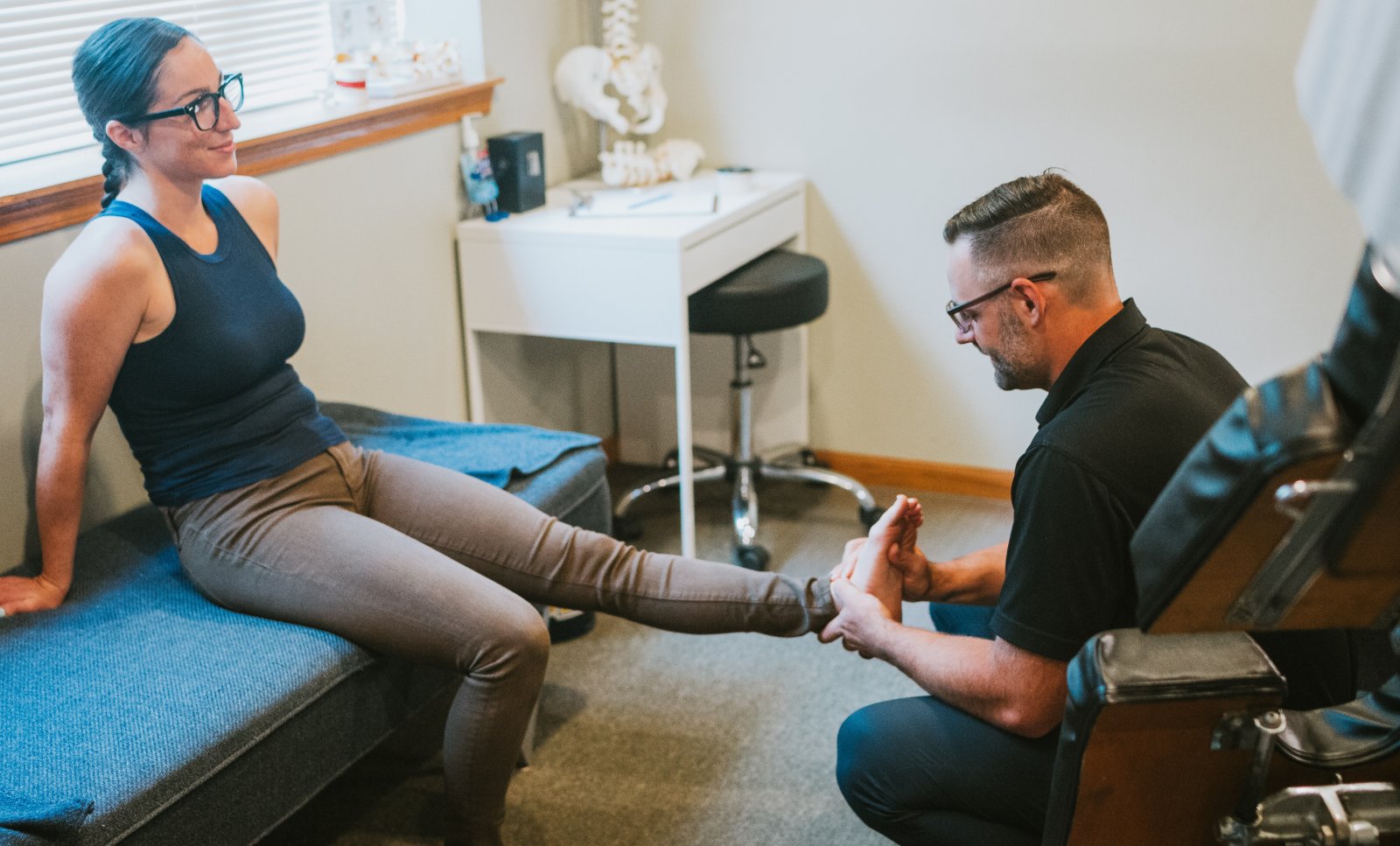
Careful evaluation of of the foot and ankle structure and soft tissue are required for a successful treatment protocol.
Guided corrective stretches and exercises in Grand Rapids can make these habits more targeted to your specific mechanics. A common mistake is pushing too hard too soon; progressive, guided movement works better than aggressive stretching.
Why a Chiropractor for Foot Pain Grand Rapids Residents Trust
When searching for a chiropractor for foot pain Grand Rapids patients can rely on, technique and practice style matter. Before booking anywhere, ask which method the clinic uses, how it evaluates the whole body, and whether care is individualized to you.
Kaminski Chiropractic specializes in difficult cases where patients have already seen other chiropractors without success. Led by Dr. Paul Kaminski, D.C., we use precise, hands-on Gonstead adjustments and offer flexible scheduling. We offer a no-cost consultation.
Reducing the Risk of Heel Pain Coming Back
Prevention comes down to consistent habits. Keep your calf and plantar fascia flexible, replace worn shoes, and maintain a healthy activity balance. If you sit or stand for long stretches, take movement breaks. Many people find that staying hydrated and walking regularly supports healthy tissue.
A common myth is that chiropractic care has to continue forever. A common myth is that chiropractic care has to continue forever, and overly long treatment plans can work against a patient’s real recovery.
Requesting Your Consultation at Kaminski Chiropractic
If heel or arch pain is limiting your steps, a full examination can set a solid baseline, even before symptoms become severe. At Kaminski Chiropractic, we offer a no-cost consultation, and a full examination helps set a solid baseline for future issues.
You can book a chiropractic appointment in Grand Rapids online, and first-time patients can review new patient information to print forms at home and arrive prepared. Whether you are near downtown or elsewhere in the area, we are glad to help you move more comfortably.
Heel pain rarely resolves on its own when the underlying mechanics are never addressed. Kaminski Chiropractic offers precise Gonstead analysis, individualized care plans, and a no-cost consultation to help you find the root cause. Get started with Kaminski Chiropractic and take the first step toward moving without pain.
Frequently Asked Questions
Who is the best specialist to see for plantar fasciitis?
There is no single best provider for everyone. Podiatrists, orthopedic foot and ankle specialists, and chiropractors all treat plantar fasciitis, and each takes a different approach. A podiatrist focuses on footwear, orthotics, and foot structure. An orthopedic surgeon handles cases that may need imaging or surgical referral. A chiropractor examines how the foot, ankle, and spine move together. Start with a full clinical evaluation, then choose the provider whose approach fits your case and your goals.
How long does plantar fasciitis recovery time usually take?
Most people improve within a few weeks to a few months with consistent conservative care, though some cases take longer. Recovery time depends on how long you have had symptoms, how consistently you follow your plan, and whether you keep loading the foot. If pain is not improving after several weeks of self-care, a clinical evaluation can identify what is holding recovery back.
What are effective natural remedies for heel pain I can try at home?
Calf stretching, arch support in your shoes, and icing after activity are reasonable starting points. Patients are typically advised to follow at-home instructions, stay hydrated, walk regularly, and ice when needed. Avoid barefoot walking on hard floors first thing in the morning, and replace worn-out shoes. These steps support healthy movement but do not replace an exam if pain persists or worsens.
How does a chiropractor for foot pain in Grand Rapids approach plantar fasciitis?
A chiropractor examines foot mechanics alongside the ankle, knee, hip, and spine, because strain in one area can change how the whole leg bears weight. At Kaminski Chiropractic, we use the Gonstead technique, which includes a five-component analysis with full-spine X-rays and thermal scanning. Care is individualized to each patient. Book a consultation to see whether this approach fits your case.
