
Table of Contents
- Understanding Chiropractic Care and Physical Therapy
- How Chiropractic Adjustments for Back Pain Work
- Physical Therapy for Lower Back Pain: Methods and Goals
- Key Differences in Treatment Approach
- How Long Does Physical Therapy Take for Back Pain?
- Can You See a Chiropractor and Physical Therapist at the Same Time?
- Costs, Insurance, and What to Expect
- Choosing the Right Approach for Your Back Pain
Last Updated: October 18, 2026
Understanding Chiropractic Care and Physical Therapy
Chiropractic vs physical therapy for back pain are two distinct approaches to musculoskeletal conditions, though their goals sometimes overlap. At Kaminski Chiropractic, we help patients understand which path fits.
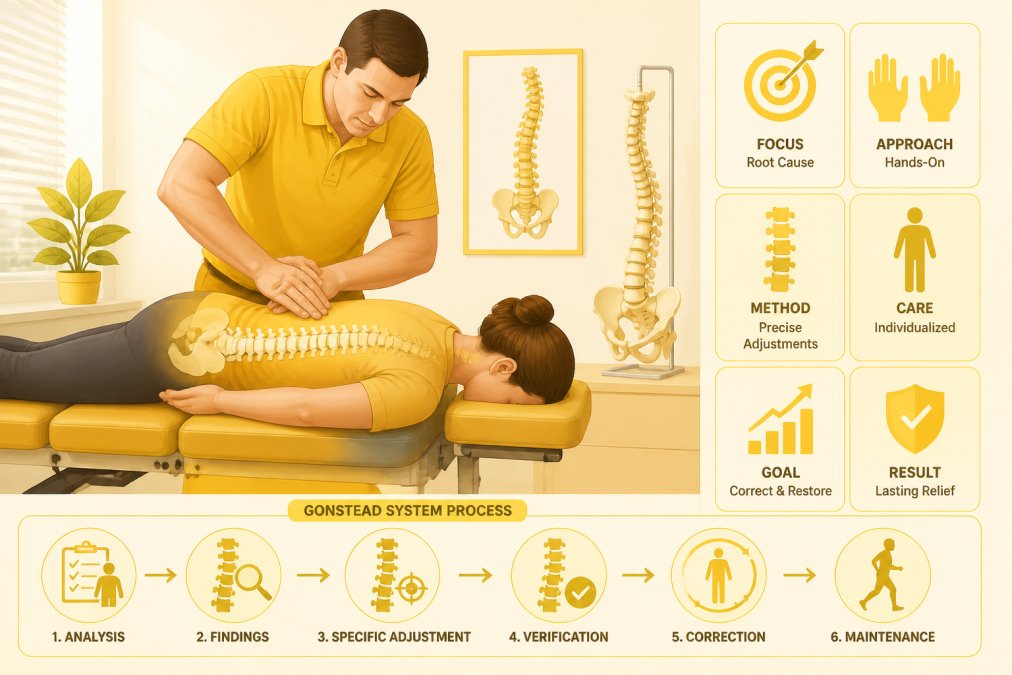
Chiropractic care corrects spinal alignment through hands-on adjustments and manual therapy. Physical therapy emphasizes movement retraining, therapeutic exercise, and functional restoration.
Chiropractors manipulate joints and vertebrae directly; physical therapists build strength and flexibility through guided movement.
How Chiropractic Adjustments for Back Pain Work
Spinal adjustments address misalignments (subluxations) that restrict joint mobility and compress nerves. When vertebrae shift out of position, they irritate surrounding tissues and trigger pain signals. An adjustment applies controlled force to restore alignment and function.
The Gonstead system, which we use at Kaminski Chiropractic, involves a five-component analysis:
- Full-spine X-rays to identify structural issues
- Thermal scanning to detect nerve irritation
- Palpation to assess vertebral position
Your adjustment targets the actual problem, not just symptoms. As alignment improves, nerve pressure decreases and supporting muscles relax.
The goal isn’t just pain reduction but restoring spinal health and preventing recurrence.
Physical Therapy for Lower Back Pain: Methods and Goals
Physical therapy for lower back pain uses therapeutic exercise, stretching, and movement retraining to rebuild strength and restore function.
A typical physical therapy program includes:
- Initial assessment of movement patterns and muscle weakness
- Targeted strengthening exercises for core and supporting muscles
- Flexibility work to improve range of motion
The principle: weak or imbalanced muscles contribute to back pain. Strengthening stabilizers and correcting movement patterns addresses why pain developed.
Physical therapy works best when muscle weakness or poor movement patterns are primary drivers, especially chronic low back pain, post-injury rehab, and prevention.
Treatment spans weeks to months.
Key Differences in Treatment Approach
The fundamental difference between chiropractic and physical therapy for back lies in the primary intervention: chiropractors use manual adjustment to restore joint alignment; physical therapists use exercise and movement to rebuild strength and function. The more useful comparison is how each performs across types of back pain, what the evidence establishes, and where safety differs.
|
Aspect |
Physical Therapy |
|
|---|---|---|
|
Primary Focus |
Spinal alignment, nervous system irritation, and joint mobility |
Muscle strength and movement patterns |
|
Main Intervention |
Manual adjustments and spinal manipulation |
Therapeutic exercise and stretching |
|
Treatment Duration |
Often shorter visits, approximately 10 minutes |
Typically 45-60 minute sessions |
|
Patient Activity |
Passive during adjustment, then home care |
Active participation in exercises |
|
Goal Timeline |
Rapid pain relief, then maintenance |
Gradual functional improvement |
|
Best For |
Acute pain, misalignment, mobility restriction |
Chronic pain, weakness, postural issues |
|
Evidence Base |
Moderate for acute and chronic nonspecific low back pain; weaker for specific structural claims |
Strong for chronic low back pain, exercise-based care, and functional restoration |
|
Safety Profile |
Generally safe for most adults; rare serious adverse events with spinal manipulation; contraindications exist |
Low risk overall; soreness after new exercise is common and temporary |
Matching the Approach to the Type and Duration of Back Pain
Treating all back pain as one condition is the most common mistake. The better question is which approach fits the type and duration of your pain:
- Acute nonspecific back pain (under 4-6 weeks): Both approaches can help. Clinical guidelines generally recommend staying active and avoiding bed rest. Chiropractic adjustments may provide short-term pain relief; physical therapy focuses on early movement and education. Many people improve with either, and some need neither beyond self-care.
- Chronic nonspecific back pain (beyond 12 weeks): Exercise-based care, including physical therapy, has the strongest evidence base. Chiropractic care may be used as part of a multimodal plan, but manipulation alone is less likely to produce durable change than a program that builds strength and movement capacity.
- Recurrent back pain: The priority is preventing the next episode. Physical therapy’s emphasis on strength, movement patterns, and home exercise tends to fit this goal. Chiropractic maintenance visits are common.
What the Evidence Can and Cannot Establish
Clinical guidelines recommend nonpharmacologic care first, exercise, manual therapy, and education, so both chiropractic and physical therapy sit inside the recommended first-line space for many patients. What the evidence cannot establish is universal superiority: head-to-head studies often show similar short-term pain relief, with exercise-based care showing advantages for function and longer-term outcomes in chronic cases. Be cautious of any provider claiming their method is proven superior for all back pain.
Safety and Limits of Spinal Manipulation
Spinal manipulation is generally safe for most adults when performed by a trained provider after assessment.
Physical therapy carries low risk overall; new exercises can cause temporary soreness, and progress should be monitored. Neither replaces urgent medical care when red flags are present.
How Long Does Physical Therapy Take for Back Pain?
How long does physical therapy take for back pain depends on severity, chronicity, and home-exercise consistency.
Most acute cases improve within 4-6 weeks of consistent physical therapy; chronic conditions often require 8-12 weeks or longer.
Factors affecting duration include:
- How long you’ve had pain (acute vs. chronic)
- Underlying cause (muscle strain vs. structural issue)
- Your starting fitness level
Therapists typically schedule 2-3 sessions per week initially, tapering to 1-2 weekly as you improve and focus on home exercises.
Consistency is key: patients who do home exercises daily progress faster than those who only exercise during sessions.
Can You See a Chiropractor and Physical Therapist at the Same Time?
Yes, many patients benefit from combining chiropractic and physical therapy. They address different aspects of the problem and often complement each other.
Here’s how they work together:
- Chiropractic adjustments restore joint mobility and reduce nerve irritation
- Physical therapy then builds strength to maintain that mobility
- Exercise prevents the misalignment from recurring
This combination is particularly effective for chronic back pain with both alignment and weakness components. The adjustment addresses immediate pain and dysfunction; the therapy prevents recurrence.
Coordination matters: providers need to communicate about your treatment plan, conflicting approaches reduce effectiveness, while shared goals improve results.
Insurance coverage may affect this decision. Some plans cover both; others have limits. Discussing coverage with each provider’s office before starting treatment prevents surprise bills.
Costs, Insurance, and What to Expect
Chiropractic and physical therapy costs vary by insurance, location, and treatment needs, and both typically require a consultation first. Rather than quoting a single price, understand the structure of care, the questions to ask, and how to compare costs without being misled by per-visit pricing.
Typical Appointment Structure
Chiropractic visits usually run 20-30 minutes: assessment, adjustment, and often X-rays or thermal scans. Physical therapy sessions typically last 45-60 minutes with hands-on work plus exercise instruction. First visits are longer for both, including history, examination, and a plan of care.
A typical course of care also differs:
- Chiropractic: Often starts with 1-2 visits per week, tapering as symptoms improve. Maintenance visits are common but should be justified by measurable goals, not schedule alone.
- Physical therapy: Often starts with 2-3 sessions per week for several weeks, tapering as you become independent with a home program. Discharge is a normal and expected outcome.
How to Compare Local Costs Without Being Misled
Without insurance, costs vary significantly by provider and region. Per-visit pricing is easiest to compare but least useful alone. A better comparison includes:
- Total episode cost: estimated number of visits multiplied by per-visit cost, plus any imaging or supplies.
- What’s included: some providers bundle assessment, adjustment, and modalities into one fee; others itemize.
- Progress checkpoints: ask when and how progress will be reassessed, and what happens if you are not improving.
Chiropractic care often has a lower per-visit cost but higher visit frequency, while physical therapy has a higher per-visit cost but a defined endpoint. The important question is cost per result: a treatment that costs more but resolves pain faster may be more economical long-term than cheaper sessions with minimal benefit.
For specific pricing and insurance details, contact Kaminski Chiropractic directly. We work with most major insurance plans and can discuss your coverage before you start treatment.
Choosing the Right Approach for Your Back Pain
Back pain limits your life and costs you time. At Kaminski Chiropractic, we use the five-component Gonstead analysis to identify exactly what’s causing your pain, then deliver precise adjustments tailored to your unique needs. Whether your pain stems from misalignment, muscle weakness, or both, we work with you to restore function and prevent recurrence. Request an appointment today and discover why patients who’ve tried everything else often find their answer with us.