
Table of Contents
- Common Lower Back Stiffness Causes
- Why Is My Lower Back Stiff in the Morning?
- How to Relieve Lower Back Stiffness
- When to Worry About Lower Back Stiffness
- How Long Stiffness Lasts and Why It Comes Back
- Preventing Stiffness at Work and at Home
- Frequently Asked Questions
Last Updated: October 22, 2026
Common Lower Back Stiffness Causes
Lower back stiffness is a feeling of tightness or resistance when you try to bend, stand, or twist. At Kaminski Chiropractic, we see it most often as a signal, not a disease.
That guarding is the key. A stiff back often locks up because the muscles around the spine tighten to protect an injured or inflamed structure.
Below, we break down the most common causes by symptom, so you can spot which pattern sounds like yours.
Muscle Strains, Sprains, and Soft Tissue Tightness
A muscle strain is a stretch or tear in a back muscle. A sprain affects the ligaments that hold the spine together. Both cause stiffness, and both are common after heavy lifting, an awkward movement, or a sudden twist.
The pattern here is usually clear:
- Stiffness that starts within a day of a specific activity
- Soreness that worsens with certain motions
- Relief when you rest, but tightness when you sit too long
Soft tissue tightness in the back muscles can also build slowly. When muscles stay tight, they limit movement. Less movement makes them tighter. That loop is why a stiff back can feel worse after a quiet weekend.
Posture, Prolonged Sitting, and Hip or Hamstring Tightness
Hours at a desk shorten the hip flexors, the muscles at the front of the hip. Tight hip flexors pull on the lower back and add strain. Tight hamstrings, the muscles at the back of the thigh, do the same by flattening the natural curve of the spine.
A common mistake is stretching hard to fix this. Overstretching an already irritated back can make stiffness worse. Gentle, consistent movement works better than aggressive stretching.
Disc Problems, Arthritis, and Inflammatory Conditions
Some stiffness comes from the spine itself. A herniated disc can press on a nerve and cause stiffness with leg pain or numbness. Arthritis and age-related spinal changes narrow the joints and reduce mobility.
These causes need a proper exam. A hands-on assessment, imaging when needed, and a clear look at your movement patterns separate a simple strain from something that needs more care.
Why Is My Lower Back Stiff in the Morning?
Morning lower back stiffness is common and usually has a simple cause: your back has been still for hours. Fluid settles in the discs, muscles cool down, and the spine feels locked until you move.
Two patterns matter:
- Stiffness that eases within 30 minutes of moving often points to muscle tightness or mild disc irritation.
- Stiffness that lasts more than an hour and improves with exercise can point to an inflammatory condition.
Dehydration plays a role too. Discs hold water, and poor hydration overnight can leave you feeling stiffer. A glass of water before bed and a few gentle movements before you get up can help.
How to Relieve Lower Back Stiffness
The fastest way to relieve lower back stiffness is gentle, progressive movement, not bed rest. Start small, move often, and build up as the tightness fades.
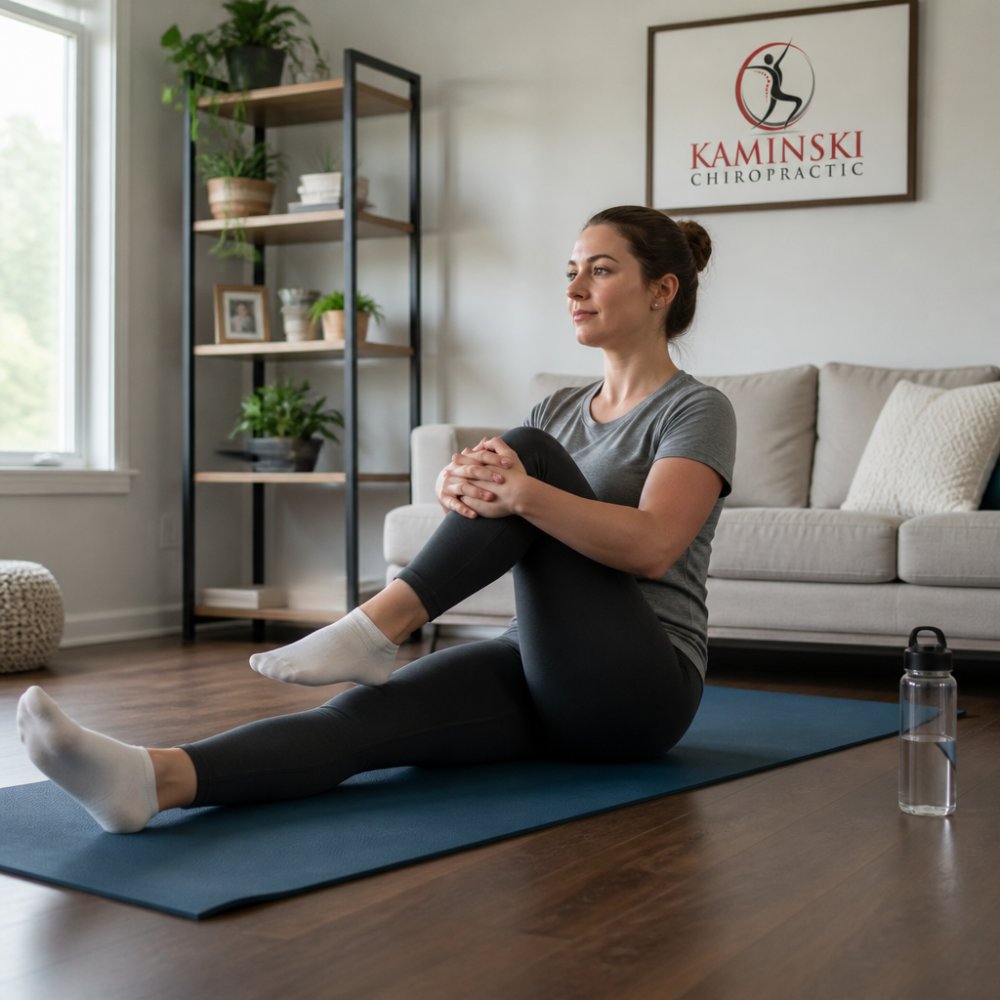
Performing a seated knee-to-chest stretch to relieve lower back stiffness on a yoga mat in a bright room.
Performing a gentle seated knee-to-chest stretch can help relieve tightness in the lower back.
Step 1: Heat or cold, chosen by the clock
Use heat for stiffness that feels tight and achy, especially first thing in the morning or after prolonged sitting. A warm pack or a 15- to 20-minute shower set to a comfortable temperature loosens guarding muscles before you move. Use cold for a recent strain, a flare-up after activity, or an area that feels hot and swollen. Apply an ice pack wrapped in a towel for 10 to 15 minutes at a time.
Step 2: Gentle mobility, dosed in minutes
Move before you stretch. Try pelvic tilts, knee-to-chest stretches, and slow cat-cow motions for 5 to 10 minutes, once or twice a day. Move slowly, breathe, and stop before pain. A useful rule: stiffness that eases as you move is a green light to continue; sharp pain, numbness, or pain that travels down a leg is a stop sign. Overstretching an irritated back can make stiffness worse, so gentle and consistent beats aggressive.
Step 3: Walk short and often
A 10-minute walk, two or three times a day, restores movement without strain. Start with 5 minutes if 10 feels like too much, and add a few minutes each day as the tightness fades. Walking is often better tolerated than prolonged standing, so break up sitting with short walks rather than one long session.
Step 4: Over-the-counter relief, used carefully
Over-the-counter options can take the edge off so you can move, but they are not a cure and they are not right for everyone. No single treatment suits everyone, and relief that requires daily medication for more than a couple of weeks is a reason to get evaluated rather than to keep self-treating. (Source: guidelines on maintaining good posture)
Step 5: Strengthen the core once sharp pain fades
Add gentle core work once the sharp pain fades. Start with movements you can do without holding your breath, such as pelvic tilts, dead bugs, or short holds in a neutral spine position. Build to 10 to 15 minutes, three or four days a week. Strength is what keeps the back supported between flare-ups.
Step 6: Check your setup
Adjust your chair, screen, and desk so you are not slumped for hours. Feet flat, screen at eye level, elbows near 90 degrees, and a small cushion or rolled towel at the lower back if the chair lacks support. Stand and move every 30 to 45 minutes.
When to stop self-care and get evaluated
If stiffness does not improve after a couple of weeks of consistent self-care, or if it repeatedly returns, a proper evaluation can find what is driving it. Stop and seek care sooner if you develop leg weakness, numbness, loss of bladder or bowel control, fever, or severe pain after a fall. That is where our Gonstead-focused exam helps. We use full-spine X-rays and thermal scanning to pinpoint the actual cause, not just the symptom.
When to Worry About Lower Back Stiffness
Most stiffness is not an emergency. But some signs mean you should seek care right away. Watch for:
- Stiffness with fever, chills, or unexplained weight loss
- Numbness in the groin or inner thighs
- Loss of bladder or bowel control
- Severe pain after a fall or injury
- Stiffness that keeps you awake night after night
These can signal infection, fracture, or nerve damage. Get seen promptly. For everything else, a nagging stiff back that will not quit is a good reason to get it checked before it becomes chronic.
How Long Stiffness Lasts and Why It Comes Back
Recovery expectations depend on the cause, and the pattern of your stiffness tells you more than any single number. Use these ranges as a guide, not a diagnosis.
Short-lived stiffness
Stiffness after a specific activity, a long drive, or a poor night’s sleep often eases within a few days to two weeks with gentle movement. A simple muscle strain usually follows the same arc: sore for a few days, noticeably better within one to two weeks, and largely resolved by four to six weeks. If it is improving week over week, you are on the right track.
Persistent stiffness
Stiffness that lasts more than a few weeks, or that never fully settles, deserves a closer look. Posture and tight hip or hamstring patterns can linger for months if you do not change the habits feeding them. Inflammatory conditions such as ankylosing spondylitis tend to cause stiffness that is worst in the morning, lasts more than an hour, and improves with exercise rather than rest. That pattern is a reason to get evaluated rather than to keep stretching.
Recurrent stiffness
Recurrence is the real issue. A back that locks up once tends to lock up again unless you address the cause. A common pattern is a cycle of relief, return to normal activity, and another flare-up, because the underlying mobility and strength deficits were never addressed. Building mobility and strength, not just chasing relief, is what reduces the frequency of flare-ups. Patients who keep up with home exercises and adjust their workspace tend to see fewer episodes.
What recovery looks like week by week
A realistic progression for a mild strain looks like this: days one to three, move gently and avoid bed rest; days four to seven, add short walks and easy mobility; weeks two to four, add core work and return to normal daily activity as tolerated; weeks four to six, build strength and address the habits that set it off.
Signs the timeline is not normal
Get evaluated sooner if stiffness keeps you awake night after night, spreads down a leg, comes with numbness or weakness, follows a fall or injury, or is paired with fever or unexplained weight loss. Those patterns do not fit the usual recovery timeline and need a proper exam.
Preventing Stiffness at Work and at Home
Prevention comes down to movement and setup. Small daily habits protect the lower back far better than occasional deep stretches.
- Stand and move every 30 to 45 minutes
- Set your screen at eye level to avoid a curved spine
- Lift with your legs, not your back
- Keep hip flexors and hamstrings loose with short daily stretches
- Stay hydrated through the day
At Kaminski Chiropractic, we look at how your whole spine moves, not just where it hurts. Dr. Paul Kaminski uses the Gonstead system to find and correct the root cause, so you can move freely again.
Lower back stiffness rarely fixes itself for good if the underlying cause goes unaddressed. If you have tried stretching, rest, and over-the-counter relief without lasting change, it may be time to find out what is actually driving the tightness.
Frequently Asked Questions
When should I worry about lower back stiffness?
Seek medical care promptly if stiffness comes with numbness or weakness in the legs, loss of bladder or bowel control, fever, unexplained weight loss, or pain that follows a fall or accident. Stiffness that lasts more than six weeks, wakes you at night, or keeps improving then worsening without a clear trigger also deserves a professional look. These red flags are uncommon, but they help separate ordinary muscle tightness from conditions that need imaging or urgent treatment.
Can sitting too long cause lower back stiffness?
Yes. Prolonged sitting shortens hip flexors and hamstrings and reduces blood flow to back muscles, which leaves the lower back feeling locked up when you stand. Office workers often notice stiffness most in the first few minutes after leaving a chair. Standing and moving every 30 to 45 minutes, adjusting chair height so feet rest flat, and adding a short hip-flexor stretch midday can reduce how stiff the back feels by the end of the workday.
Why is my lower back stiff when I wake up?
Morning stiffness usually reflects muscles and discs that have rested in one position for hours. Fluid shifts into spinal discs overnight, and soft tissues tighten, so the first movements feel restricted. Most people loosen up within 15 to 30 minutes of moving around. Stiffness that lasts longer than an hour every morning, especially with swelling or pain in other joints, is worth discussing with a clinician because it can point to inflammatory arthritis rather than simple muscle tightness.
How do I get rid of stiffness in my lower back?
Start with gentle movement rather than bed rest. A short walk, controlled knee-to-chest stretches, and hip-flexor and hamstring stretches help restore mobility without overstretching irritated tissues. Apply heat for 15 to 20 minutes to relax tight muscles, and avoid heavy lifting until movement feels easier. If stiffness persists beyond two weeks or keeps returning, a hands-on evaluation can identify whether the cause is muscular, postural, or spinal so treatment targets the right source.