
Quick Summary
Arm and leg pain appearing together is more common than most people expect, because nerves from the spine supply both limbs and a problem at one point along that route can cause symptoms far away. Common causes include pinched nerves, joint problems, overuse, circulation issues, and systemic conditions. Sudden symptoms, cold or swollen limbs, or loss of bladder or bowel control need emergency care.
- Both limbs are fed by nerves that exit the spine and travel long distances to the hands and feet.
- Causes are commonly sorted into nerve, joint, muscle and tendon, vascular, and systemic categories.
- A cold, pale, or blue limb or a swollen, warm calf warrants emergency care rather than a routine visit.
- Loss of bladder or bowel control or numbness in the saddle area requires calling 911 or going to an emergency department.
- Self-diagnosis from an internet search is unreliable, so a full examination helps sort out the cause.
Table of Contents
- Why Arm and Leg Pain Often Happen Together
- Arm and Leg Pain Causes Most Often Seen in Practice
- Sudden Arm and Leg Pain: What It May Mean
- When Arm and Leg Pain Needs Immediate Medical Care
- How Gonstead Chiropractic Evaluates Arm and Leg Pain
- Finding a Chiropractor for Arm and Leg Pain in Grand Rapids
- Scheduling Your Evaluation at Kaminski Chiropractic
- Frequently Asked Questions
Why Arm and Leg Pain Often Happen Together
Arm and leg pain showing up in the same stretch of time can feel alarming, but it is more common than most people expect.
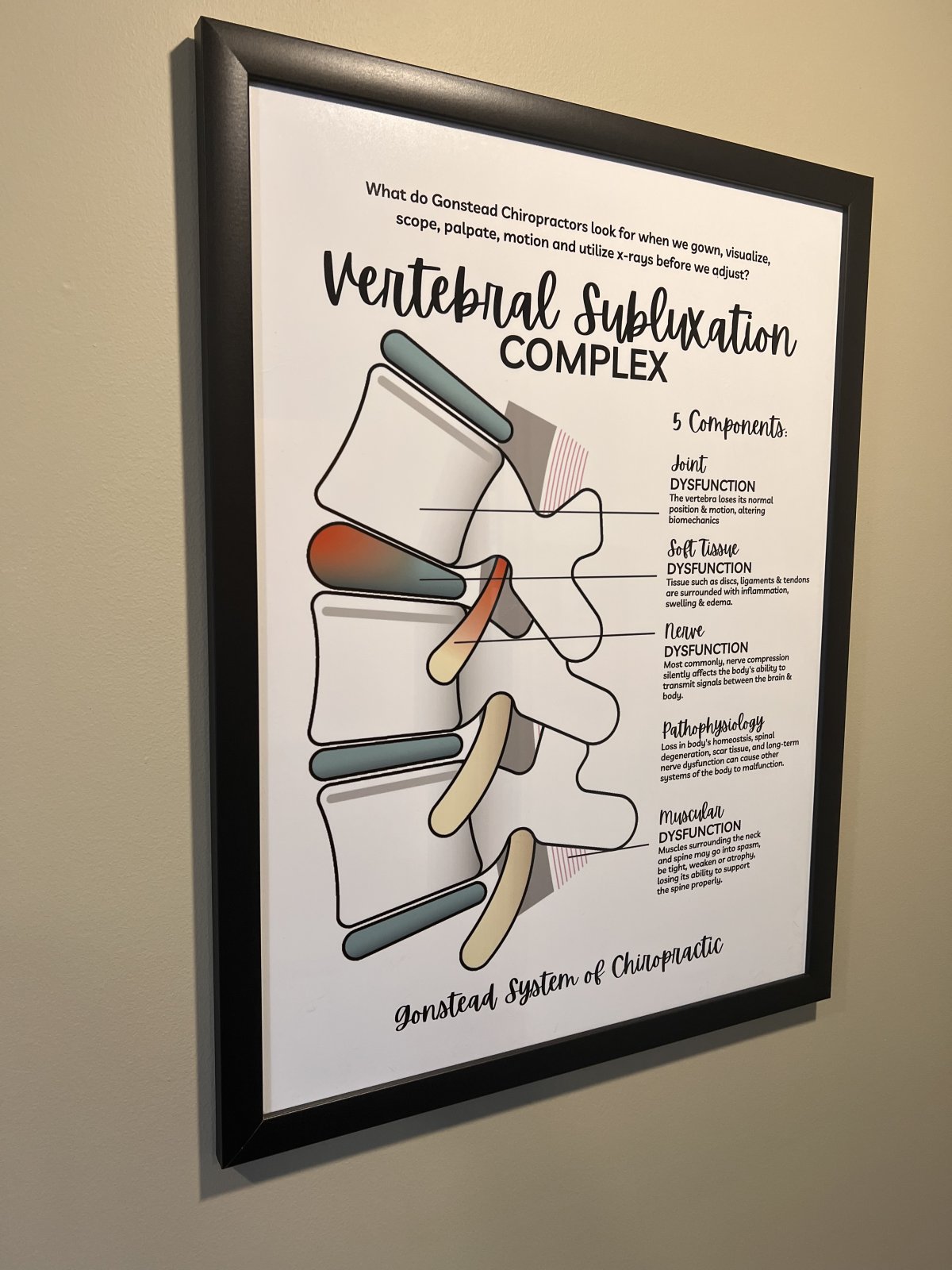
Because the nervous system and musculoskeletal system work as one connected unit, pain in one limb does not always mean the problem is in that limb.
Not every case of combined limb pain has a spinal origin.
Arm and Leg Pain Causes Most Often Seen in Practice
When arm and leg pain present together, clinicians generally look for a shared mechanical or neurological driver. Causes are commonly sorted by tissue system: nerve, joint, muscle and tendon, vascular, and systemic.
Nerve-Related Causes
A pinched nerve, technically called nerve root compression or irritation, occurs when a nerve exiting the spine is compressed or inflamed.
What makes this pattern distinctive is the distribution.
A second nerve pattern involves compression farther from the spine.
Gonstead analysis is one approach to evaluating whether spinal mechanics may be contributing to nerve irritation. Imaging such as X-rays or MRI may be appropriate when symptoms persist or neurological changes appear.
Joint-Related Causes
Joint problems tend to produce pain that is more localized and mechanical, worse with specific movements, better with rest or a change of position.
A common pattern is a person with knee arthritis who begins limping and then develops low back or hip pain, or a person with shoulder pain who changes how they carry and develops neck and arm symptoms.
Muscle and Tendon Causes
Repetitive movement, awkward posture, and sustained load can irritate tendons, muscles, and the nerves that run through tight tissue.
Overuse pain tends to build gradually, worsen with specific activities, and ease with rest in the early stages. Patients often describe aching, heaviness, or fatigue rather than sharp shooting pain.
Addressing overuse usually involves reviewing workload, posture, and movement patterns alongside a structural assessment.
Vascular Causes
Circulation problems are less common than nerve or muscle causes but important to recognize because some are time-sensitive. Peripheral artery disease can cause cramping or fatigue in the calves or thighs with walking that eases with rest (Peripheral Artery Disease – Symptoms). Deep vein thrombosis can cause swelling, warmth, redness, and pain in one leg (the CDC).
Watch out: a cold, pale, or blue limb, a swollen and warm calf, or sudden severe pain in a limb with color change is a reason to seek emergency care rather than schedule a routine visit.
Systemic and Other Causes
Some conditions produce limb pain on both sides without a mechanical driver. Thyroid disease, vitamin B12 deficiency, diabetes (which can cause peripheral neuropathy), and some autoimmune conditions can all cause numbness, tingling, or aching in the arms and legs. Certain medications can contribute as well. These possibilities are one reason a thorough history, including medical conditions, medications, and family history, is part of a good evaluation.
How the Patterns Are Sorted Out
No single symptom proves a cause. Clinicians combine the history (when symptoms started, what makes them better or worse, which fingers or toes are involved), the examination (reflexes, strength, sensation, joint motion, and specific orthopedic tests), and imaging or testing when indicated.
The table below sorts the most common causes by tissue system, with the pattern that usually points to each one.
|
Cause |
Typical pattern |
Key sign |
|---|---|---|
|
Pinched nerve |
Pain, numbness or tingling along one path |
Follows a specific nerve distribution |
|
Joint problems |
Localized, mechanical pain |
Worse with specific movements |
|
Overuse (muscle/tendon) |
Gradual aching, heaviness |
Worsens with specific activities |
|
Vascular causes |
Cramping, swelling or color change |
Cold, pale or blue limb |
|
Systemic conditions |
Numbness or aching on both sides |
No mechanical driver |
Sudden Arm and Leg Pain: What It May Mean
A sudden onset of arm and leg pain is a different situation from gradual symptoms that build over weeks.
Possible explanations include a disc herniation that has shifted suddenly, a joint sprain or strain, or a flare of an existing condition. Less commonly, sudden limb pain can reflect a vascular problem, infection, or a serious neurological event.
If the onset was sudden, be particularly attentive to any change in strength, bladder or bowel control, or sensation in the groin or inner thighs. Sudden symptoms with fever, chest pain, or shortness of breath also warrant immediate medical attention (See article).
When Arm and Leg Pain Needs Immediate Medical Care
Some presentations of arm and leg pain are medical emergencies and should not wait for an appointment. Call 911 or go to the nearest emergency department if you experience any of the following:
- Sudden weakness or numbness on one side of the body, or difficulty speaking or seeing
- Loss of bladder or bowel control, or numbness in the saddle area (inner thighs, groin, or buttocks)
- Chest pain, shortness of breath, or a cold, pale, or blue arm or leg
Symptoms that are severe, rapidly progressing, or not improving over several days also merit prompt medical evaluation through your primary care provider, urgent care, or an orthopedic or neurology referral. Chiropractic care is a conservative option for many musculoskeletal problems, but it is not the right first step for every case.
How Gonstead Chiropractic Evaluates Arm and Leg Pain
The Gonstead technique emphasizes a detailed, individualized analysis of the spine and how it relates to the nervous system and surrounding structures. Rather than applying the same adjustment to every patient, the approach focuses on identifying specific areas of spinal dysfunction and tailoring care to the findings. Evaluation is where most of the clinical reasoning happens.

The History
Evaluation starts with a conversation. A thorough evaluation starts with the history: when symptoms began, whether they came on suddenly or gradually, and which specific parts of the arm or leg are involved. I ask about numbness, tingling, weakness, and changes in grip or gait, because those details help distinguish a nerve pattern from a muscle or joint one. A complete history also covers work, hobbies, sleep position, prior injuries, medical conditions, medications, and any imaging or treatment already received.
The Examination
The examination looks at the whole picture, not just the spot that hurts. It typically includes:
- Static and motion palpation of the spine to identify segments that are restricted, tender, or moving asymmetrically
- Orthopedic tests of the shoulders, elbows, wrists, hips, knees, and ankles to provoke or relieve symptoms and localize the involved tissue
- Neurological testing, reflexes, muscle strength, and sensation, to assess nerve function in both the arms and the legs
In a Gonstead evaluation, these findings are compared against each other. A restricted segment on one side of the spine, a change in reflex on the same side, and a symptom pattern that matches that nerve level all point in the same direction. When the findings disagree, that is a signal to look further rather than assume.
Imaging and Testing Decisions
Imaging is used when it will change the plan, not as a routine. Full-spine X-rays may be appropriate when the history or examination suggests structural issues, prior injury, or a pattern that needs to be seen rather than inferred.
Watch out: not every case needs imaging, and not every case should skip it. The decision should follow the examination findings and your specific history, not a one-size-fits-all protocol.
What the Evaluation Tells You
The goal of the evaluation is to answer three questions: what is likely causing your symptoms, whether conservative care is appropriate, and what the realistic expectations are. If the findings point to a musculoskeletal or spinal contributor that may respond to specific chiropractic care, the specific segments involved can be explained and a plan outlined. If findings suggest something that needs medical evaluation, a vascular concern, a systemic condition, or a neurological change that warrants imaging, the appropriate referral should be made.
It is important to understand the limits of this process. A chiropractic evaluation identifies musculoskeletal and neurological patterns that may respond to conservative care, but it does not replace medical diagnosis for every condition. The value of a thorough Gonstead evaluation is not that it finds a spinal cause in every case, it is that it helps determine whether a spinal cause is the right explanation at all.
Finding a Chiropractor for Arm and Leg Pain in Grand Rapids
Choosing a provider for ongoing arm and leg symptoms is a decision worth making carefully.
Ask whether the provider will refer you for imaging or medical care when needed, and whether they discuss possible outcomes honestly. Be cautious of anyone who promises a guaranteed result or recommends long, open-ended treatment plans before completing an assessment.
If you are searching for a chiropractor in Grand Rapids for arm and leg pain, consider whether the practice offers the specific evaluation methods you want, whether the doctor has experience with nerve-related and overuse conditions, and how clearly the clinic communicates.
Scheduling Your Evaluation at Kaminski Chiropractic
If your arm and leg pain has lasted more than a few days, is affecting your work or sleep, or you are unsure what is causing it, a consultation at Kaminski Chiropractic can be a useful next step.
You can book a chiropractic appointment in Grand Rapids, MI to begin the evaluation process. If you suspect a nerve problem in your back or leg specifically, you may also want to read about sciatica relief options in Grand Rapids, MI, and if hand numbness or tingling is part of your picture, carpal tunnel care in Grand Rapids, MI may be relevant. For a broader look at the conditions the practice treats, see the chiropractic conditions Kaminski Chiropractic treats in Grand Rapids, MI.
Bring a list of when your symptoms started, what makes them better or worse, and any medications or prior imaging you have had. That information helps us make the most of your first visit.
Frequently Asked Questions
Why do my arms and legs hurt all of a sudden?
Sudden arm and leg pain often has a mechanical or nerve-related origin, such as a disc bulge pressing on a nerve root, a muscle strain, or inflammation affecting several joints at once. Because the cause is not always clear from symptoms alone, a sudden onset deserves a proper evaluation rather than guessing. If the pain began after a fall, a car accident, or with weakness, numbness spreading, or trouble walking, seek medical care promptly. A thorough examination helps determine whether the source is spinal, muscular, vascular, or systemic.
Can a pinched nerve cause pain in both an arm and a leg?
A single pinched nerve usually produces symptoms on one side of the body, in one arm or one leg. Pain in both an arm and a leg at the same time is less typical of a single compressed nerve and may point to a broader cause, such as a systemic condition, widespread inflammation, or problems affecting more than one area of the nervous system. This is one reason a careful neurological and orthopedic assessment matters. Describing where the pain starts, how it travels, and what makes it better or worse helps guide the evaluation.
When should I seek urgent medical care for arm and leg pain?
Seek urgent medical care if arm or leg pain comes with sudden weakness, numbness in the face or one side of the body, slurred speech, chest pain, shortness of breath, loss of bladder or bowel control, or severe swelling, warmth, or redness in a limb. These signs can indicate conditions that need emergency treatment, including stroke, heart problems, blood clots, or serious nerve compression. Call 911 or go to the nearest emergency department for any of these symptoms. Do not wait to see whether they pass.
Can chiropractic care help with arm or leg pain?
Chiropractic care can be an appropriate conservative option for some types of arm and leg pain, particularly when the cause is mechanical, such as nerve irritation linked to spinal joint or disc problems. At Kaminski Chiropractic, Dr. Kaminski uses the Gonstead system, which emphasizes a thorough analysis of the spine and specific adjustments based on that analysis. Chiropractic is not appropriate for every cause of limb pain, and it does not replace medical evaluation. Patients with warning signs or unclear diagnoses should be assessed by a physician as well. A consultation can help determine whether chiropractic care fits your situation.
