
Last Updated: October 26, 2026
Quick Summary
Gonstead chiropractic differs from general adjustments by targeting one specific vertebra with one precise contact and one direction of correction, with the focus of removing the specific nervous system interference. A five-part assessment, case history, visualization, instrumentation, palpation, and X-ray analysis, cross-checks the same segment before any adjustment. The setup takes longer than the adjustment itself.
- The five-part Gonstead assessment includes case history, visualization, instrumentation, static and motion palpation, and X-ray analysis.
- A well-run first visit ends with four answers: findings, why that segment, visit plan, and what would change the plan.
- Gonstead adjustments use a sectioned table, a specific contact point on one vertebra, and a direction set by exam findings.
- Spinal manipulation has the strongest research support for short- and medium-term relief of low back and neck pain.
- Ask what the first visit costs, how many visits are recommended, and what happens if you are not improving by week four.
Table of Contents
- Why a Targeted Adjustment Feels Nothing Like a General One
- 1. One Specific Vertebra Instead of a Whole-Spine Crack
- 2. A Gonstead Chiropractic Assessment Built on Five Checks
- 3. What to Expect at a Gonstead Chiropractor, Step by Step
- 4. Inside the Gonstead Adjustment Process: Table, Contact, Direction
- 5. Gonstead Chiropractic Safety: What the Evidence and Risks Actually Show
- 6. Cost, Visit Frequency, and What a Care Plan Really Looks Like
- 7. Which Approach Fits Your Back or Neck Pain
- Frequently Asked Questions
Why a Targeted Adjustment Feels Nothing Like a General One
If you have ever had your whole back cracked in a quick series of twists and heard a dozen pops, you already know what a general adjustment feels like.
That difference matters if you have tried care before and walked away unchanged. A broad adjustment moves many joints at once.
The distinction is not marketing. It changes the exam, the table, the contact point, and the plan you follow afterward.
1. One Specific Vertebra Instead of a Whole-Spine Crack
The first difference is scope. A general adjustment often addresses several spinal areas in one visit, moving whatever feels restricted. The Gonstead method starts from the opposite assumption: locate the primary problem(s), and the rest of the spine compensates around it.
That changes how a chiropractor works:
- One contact point at a time
- One direction of correction
- One segment checked before and after
We are not chasing cracks. We are restoring motion where it is lost and restoring proper nerve function. For a deeper look at the method itself, see our guide to the Gonstead technique for back pain.
2. A Gonstead Chiropractic Assessment Built on Five Checks
A Gonstead chiropractic assessment is a five-part exam that cross-checks the same spinal segment from different angles before any adjustment happens. The five components are case history, visualization, instrumentation, static and motion palpation, and X-ray analysis.
Each check answers a different question:
- Case history: what your symptoms do over the day
- Visualization: posture and alignment seen from the side and back
- Instrumentation: heat patterns along the spine that flag inflammation and nerve irritation
- Palpation: how each segment feels at rest and in motion
- X-ray analysis: the actual position and condition of the bone
When several checks point to the same level, confidence goes up. That is the whole idea.
X-rays, Thermal Scanning, and Palpation Working Together
No single test decides the adjustment. The value comes from agreement. If the scan flags one level but the X-ray shows normal alignment there, we keep looking. In practice, this is what separates a real assessment from a quick guess.
3. What to Expect at a Gonstead Chiropractor, Step by Step
Your first visit is longer than a typical adjustment-only appointment because the exam comes first. Here is the usual flow, what each step is for, and what you should walk away knowing.
- Paperwork and history (10-15 minutes): your symptoms, when they started, what makes them better or worse, past injuries, prior chiropractic or medical care, medications, and any red-flag conditions. This is where a clinician decides whether imaging or a medical referral is needed before any hands-on work.
- Postural and movement checks (5-10 minutes): how you stand, sit, bend, and turn. The clinician is looking for asymmetry, restricted ranges of motion, and compensatory patterns, not just where it hurts.
- Instrumentation scan (2-5 minutes): a painless reading along the spine, often with a thermal or paraspinal scanner, that flags areas of altered heat or muscle activity. It is one data point, not a diagnosis.
- X-rays, if needed (10-15 minutes): taken on site when the history or exam suggests a need to see bone position, degeneration, or an anomaly. We take a full spine X-ray to see how each of the areas of the spine are reacting to one another—focusing on the whole spine and just the location of pain or symptoms. Not every patient needs them; guidelines from the American Chiropractic Association support imaging when clinically indicated rather than as a routine step for everyone.
What You Should Leave Knowing
A well-run first visit ends with four answers: what the clinician found, why the proposed adjustment targets that segment, how many visits are being recommended and on what timeline, and what would prompt a change in plan or a referral. If any of those is missing, ask. You can see the full walkthrough on our what to expect page before you come in.
4. Inside the Gonstead Adjustment Process: Table, Contact, Direction
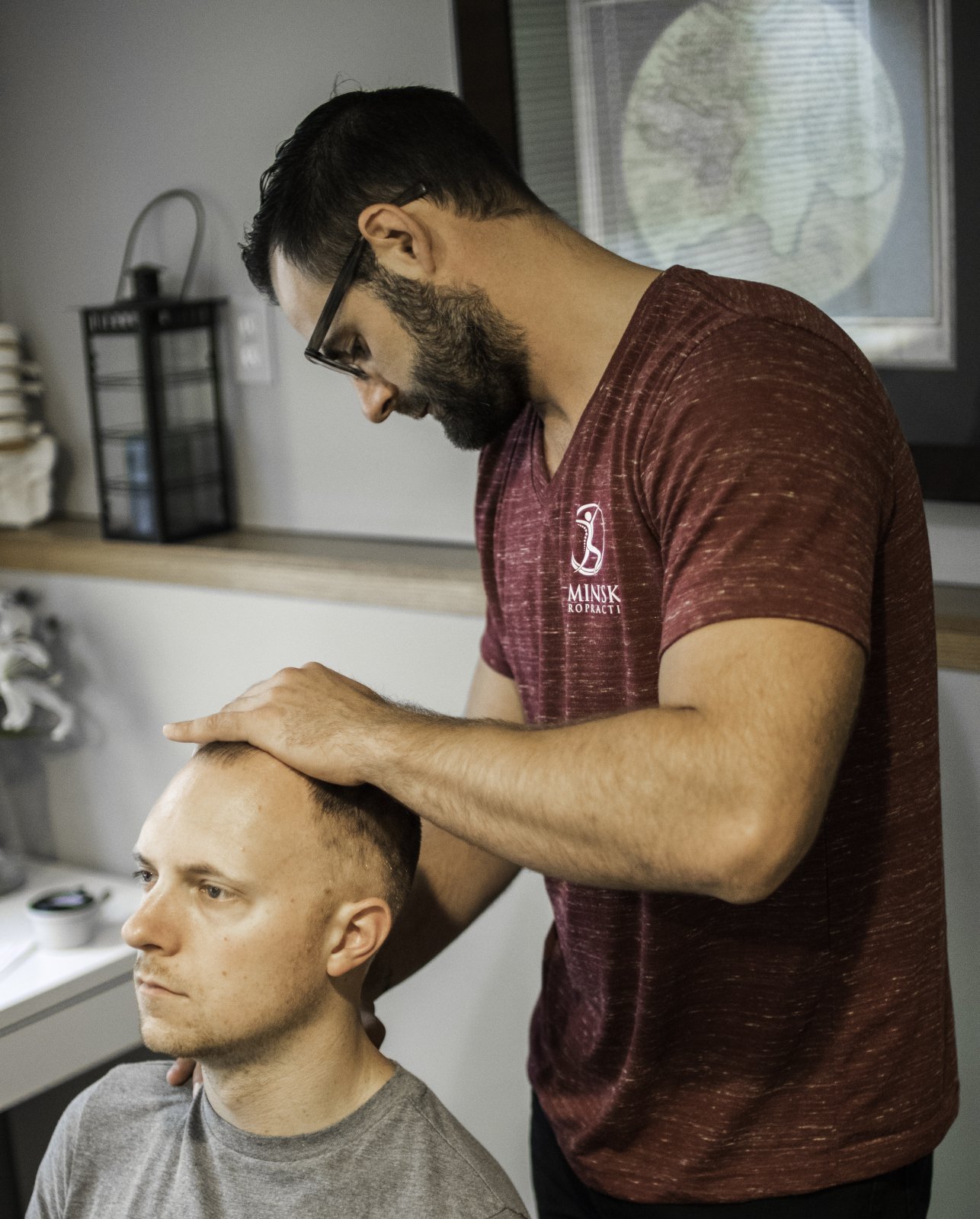
The Gonstead adjustment process uses equipment and hand positioning built for precision. Gonstead chiropractors have several different benches, tables and chairs to precisely deliver each adjustment.
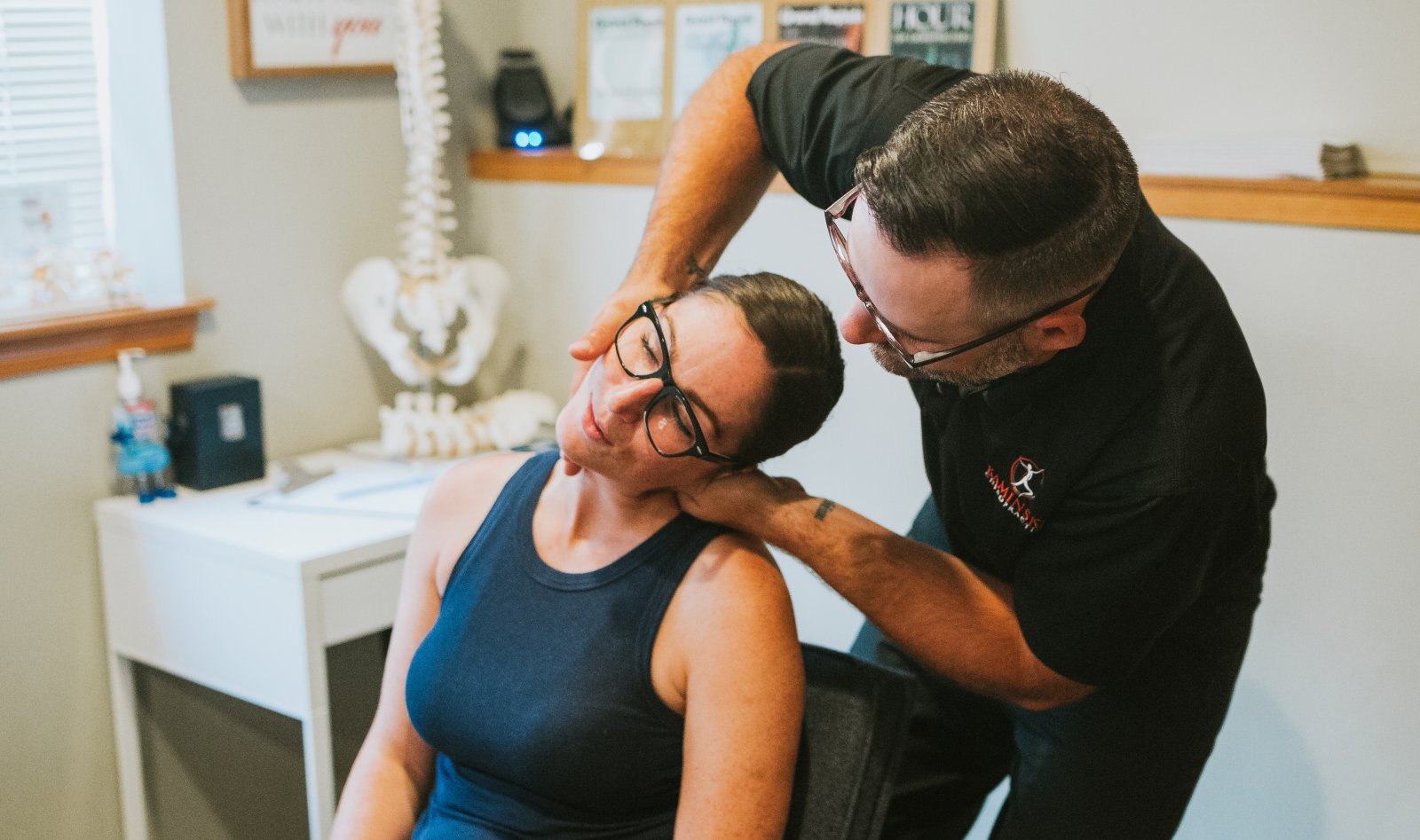
Diagram showing the precise positioning and contact point for a Gonstead chiropractic cervical adjustment
Three details define the adjustment:
- The table: sectioned so only the target area moves
- The contact point: a specific spot on one vertebra, not a broad push
- The direction: set by the X-ray and exam findings
The thrust is small and controlled. Many patients are surprised by how little force it takes. What most guides miss is that the setup takes longer than the adjustment itself.
5. Gonstead Chiropractic Safety: What the Evidence and Risks Actually Show
Gonstead chiropractic safety rests on the same foundation as any spinal manipulation: proper screening before care, a clear-eyed view of what the evidence supports, and honest limits on what an adjustment can and cannot do. The technique uses a low-force, controlled thrust, but no adjustment is risk-free, and we say so plainly.
What the Evidence Supports, and What It Does Not
Spinal manipulation, including Gonstead-style adjustments, has the strongest research support for short- and medium-term relief of low back pain and neck pain. The National Center for Complementary and Integrative Health summarizes this evidence and notes that benefits are generally modest and comparable to other conservative options for many patients. What the evidence does not show is that Gonstead adjustments cure underlying spinal disease, reverse degeneration, or outperform other well-delivered conservative care for every condition.
Common, Short-Lived Effects
- Mild soreness for a day or two, similar to what follows unaccustomed exercise
- Temporary stiffness in the treated area
- Fatigue after a first visit
- Occasional mild headache after a cervical adjustment
These are the effects most patients report, and they typically resolve without treatment.
Serious Risks, Rare but Real
Serious complications from spinal manipulation are uncommon but documented. The most discussed is vertebral artery dissection after cervical manipulation, a rare event whose causal link to adjustment remains debated in the research literature. Other uncommon risks include worsening of a herniated disc, fracture in a patient with weakened bone, and injury in someone with undiagnosed spinal instability. The American Chiropractic Association publishes professional standards that emphasize screening and informed consent for exactly these reasons.
When to Choose Medical Care Instead
An adjustment is not the right first step for every back or neck complaint. New severe pain after trauma, pain with fever, pain that wakes you at night, progressive neurological symptoms, or pain accompanied by unexplained weight loss should be evaluated medically before chiropractic care. A responsible Gonstead practitioner screens for these and refers out when care is not appropriate, and that referral is a sign of good practice, not a failure of it.
6. Cost, Visit Frequency, and What a Care Plan Really Looks Like
Pricing depends on your exam findings, imaging needs, and visit schedule, so we quote it after the assessment rather than guessing up front. Ask three questions before you start anywhere:
- What does the first visit include, and what does it cost?
- How many visits are recommended, and how will we measure progress?
- What happens if you are not improving by week four?
A corrective plan usually starts with more frequent visits and tapers as motion returns. Maintenance care comes later and is optional. If cost is a concern, our payment options page explains the methods we accept.
7. Which Approach Fits Your Back or Neck Pain
Choose based on your history, not on which technique sounds more advanced. General adjustments suit some people well. Targeted care tends to fit those who want an explanation for each adjustment.
Consider Gonstead care if you:
- Tried care before with only temporary relief
- Want imaging and a clear rationale
- Have pain that keeps returning in one spot
A general approach may fit better if you prefer quick, frequent visits with less exam time. For persistent back pain, our back pain care page explains how we assess it. When you are ready, you can book an appointment online.
|
Your situation |
Better first step |
|---|---|
|
Prior care gave only short relief |
Full Gonstead exam with imaging |
|
New, mild stiffness |
General adjustment |
|
Pain radiating down a leg |
Exam first, imaging likely |
|
Desk-related neck and wrist pain |
Postural assessment, then targeted care |
Frequently Asked Questions
What is the difference between Gonstead chiropractic and regular adjustments?
General adjustments often move several spinal areas in one visit, using similar techniques for most patients. Gonstead chiropractic starts with a detailed analysis, including full-spine X-rays and thermal scanning, to locate one specific vertebra that is not moving correctly. The adjustment then targets that single segment with a precise line of drive. The practical difference is that the correction is matched to your clinical findings rather than to a standard routine, and follow-up visits check whether that segment is holding before anything else is adjusted.
How does a Gonstead chiropractor assess the spine?
A Gonstead chiropractic assessment uses five checks. The chiropractor takes a case history, performs postural analysis, uses static and motion palpation to feel how each vertebra moves, runs instrumentation such as thermal scanning to detect temperature differences along the spine, and reviews full-spine X-rays for alignment and joint detail. Those findings are compared before any adjustment is planned. Because the five checks are cross-referenced, the segment chosen for care is supported by more than one source of evidence, which is the core of spinal specificity.
Is Gonstead chiropractic safe?
Gonstead chiropractic safety follows the same general profile as other forms of spinal manipulation, which is widely used for low back and neck pain. Serious complications are uncommon, and the most frequent side effects are temporary soreness or stiffness after a visit. A proper assessment matters: a chiropractor should screen for red flags such as fracture, infection, or progressive neurological symptoms before adjusting, and should modify or decline care when those are present. Tell your provider about pregnancy, osteoporosis, blood thinners, or recent surgery so the plan can be adapted or another option discussed.
How many Gonstead chiropractic visits might I need?
Visit frequency depends on your exam findings, how long the problem has been present, and how your body responds. Some patients notice change within a few visits, while chronic cases often need a longer corrective phase followed by less frequent maintenance. Ask for the plan in writing: the recommended frequency, the expected length of care, and the criteria used to decide when to taper.
Chronic pain wears you down, and “learn to live with it” is not a plan. At Kaminski Chiropractic, Dr. Paul Kaminski uses the five-part Gonstead analysis, full-spine X-rays, and thermal scanning to find the segment driving your symptoms, then adjusts with precise, hands-on care. We have served Grand Rapids for over a decade, and our focus is simple: get you out of pain and keep you moving. Get started with Kaminski Chiropractic and request an appointment today.
